Catalina 22 Buyer's Guide
The most-produced fiberglass sailboat ever built. More than 15,000 hulls over 50+ years of production — and it's still being built today. Here's what you need to know before you buy one.
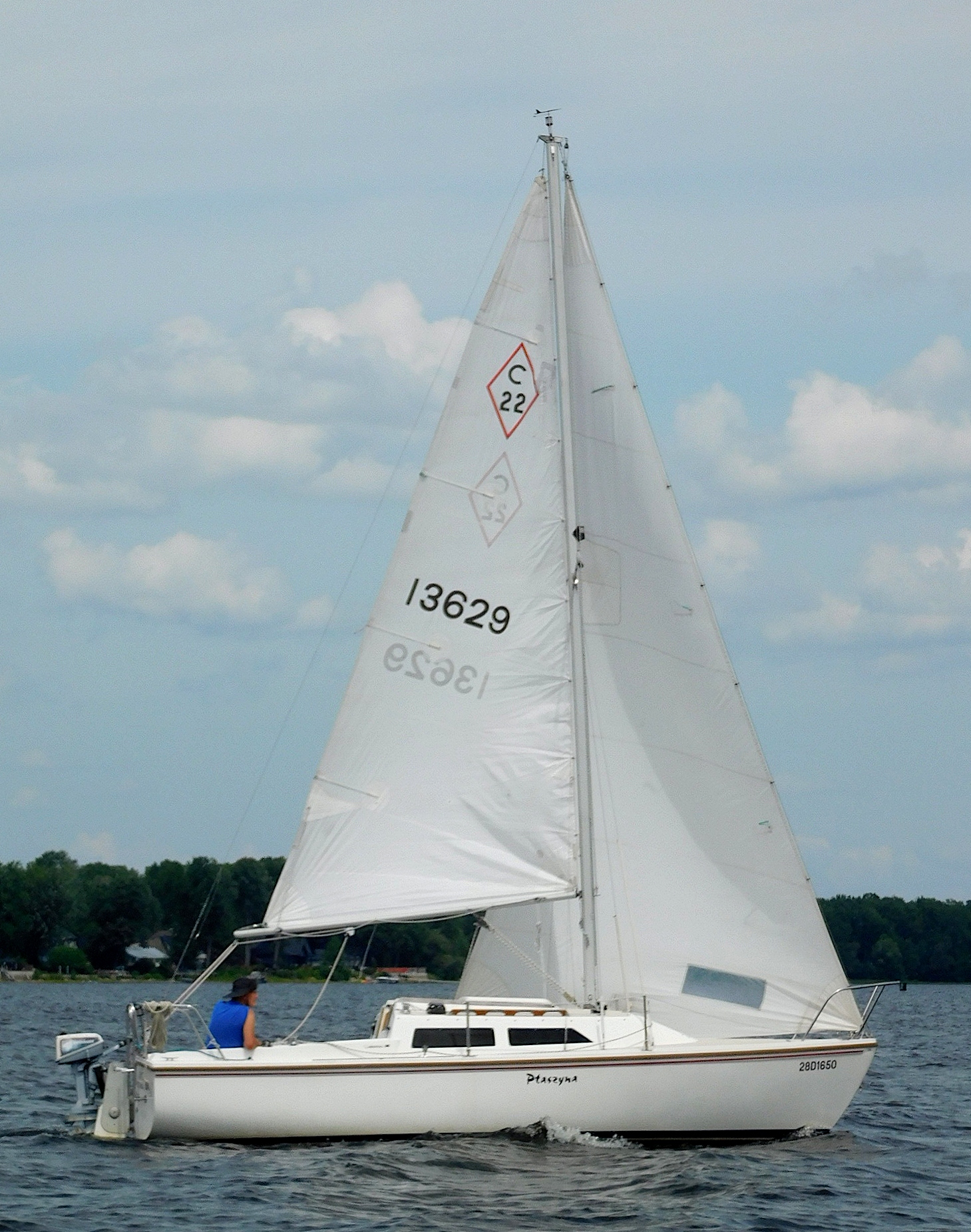
History & Background
Frank Butler designed the Catalina 22 in 1969 with a clear brief: build a trailerable family sailboat that could sleep four, point reasonably well, and sell for a price that working sailors could actually afford. He succeeded on every count. The boat went into production that year and never really stopped — over five decades and more than 15,000 hulls later, the Catalina 22 holds the record as the most-produced fiberglass sailboat in history.
The "22" in the name refers not to the overall length but to the waterline length — the boat actually measures just under 24 feet on deck. That extra foot of overhang at the bow gives the hull more carrying capacity and a bit of reserve buoyancy in chop, while keeping the boat compact enough to tow with a mid-size pickup or SUV.
Catalina Yachts built the original design through the 1970s and early 1980s essentially unchanged, then introduced incremental updates — better hardware, restyled interiors, improved deck layouts — that carried the line through the 1990s. The Mark II version arrived in the mid-1990s with a more contemporary deck treatment and tiller. In 2002 Catalina launched the redesigned Catalina 22 Sport, which brought the boat fully into the modern era with a molded non-skid deck, improved hull layup, and a cleaner interior. The Sport remains in production today.
Why so many were built: The C22 hit a rare convergence — trailerable, sleepable, raceable, and affordable. No other design has matched all four criteria as consistently over such a long production run. That longevity means parts, sails, and class knowledge are almost absurdly easy to find.
Versions & Variants
All Catalina 22s share the same basic hull, rig, and cabin arrangement — but several important configuration options affect performance, trailering, and resale value. Understanding which version you're looking at before you go to see a boat will save you from surprises.
| Version | Years | Key Features | Desirability |
|---|---|---|---|
| Standard Swing Keel | 1969–present | 2 ft trailering draft, 5 ft sailing draft. Trailerable to any ramp. Most common variant by far. | Best all-around |
| Fixed Fin Keel | 1969–present | 3.5 ft fixed draft. Better upwind performance and stability; not trailerable without a very deep trailer. | Performance edge |
| Tall Rig | Mid-1970s–present | Taller mast, larger headsail, roughly 10% more sail area. Faster in light air; requires reefing earlier in a breeze. | Racers prefer |
| Mark II | ~1993–2001 | Restyled deck, updated hardware, improved tiller, better interior layout. Significant step up from early boats in fit and finish. | Recommended |
| Catalina 22 Sport | 2002–present | Fully redesigned deck with molded non-skid, updated interior, improved rigging. Modern build quality throughout. | Best quality |
The swing keel is far and away the most common variant you'll encounter on the used market. It works by rotating on a single through-hull pivot pin and is raised and lowered by a stainless steel cable in the cabin. Both the pin and cable are wear items — inspect them carefully on any boat you're considering (more on this below).
What Years to Buy
Early boats (1969–1975)
The first-generation Catalinas are now 50+ years old. Construction was sound but the gelcoat is typically heavily oxidized, hardware is obsolete, and osmotic blistering is common below the waterline on boats that spent significant time in salt water. A motivated buyer can find real bargains here, but budget for significant cosmetic and hardware work. Not ideal for first-time buyers.
Core production era (1976–1992) — Best value
This is the sweet spot for most buyers. The hull design was proven, Catalina had worked out early production issues, and there are thousands of these boats on the market. Prices are low enough to leave real money for a sail upgrade or trailer work. A clean late-1970s or 1980s boat with a newer set of sails and a good engine is genuinely hard to beat for first-time buyers or club racers.
Mark II (1993–2001)
The Mark II brought noticeably better deck hardware, a cleaner interior, and a more modern look throughout. These boats command a small premium over same-condition early boats, and it's usually worth it. Look for one where the sails have been replaced in the last 10 years.
Catalina 22 Sport (2002–present)
The Sport is the most modern version and carries the highest resale prices on the used market. If you can afford a clean Sport, you're getting a genuinely contemporary trailer sailer. Less deferred maintenance, better gelcoat, updated hardware throughout.
Common Problems to Inspect
The Catalina 22 is a robust boat with a well-understood set of failure modes. None of them are unusual for a fiberglass production sailboat of this era, and none are insurmountable — but you need to find them before you buy.
-
Swing keel pivot pin and cable The single most important inspection point on swing-keel boats. The stainless pivot pin corrodes in the aluminum keel housing, and the lifting cable fatigues over time. Have someone wiggle the keel while you watch the pin from the bilge. If there's significant slop, budget for a pin replacement. Always cycle the keel up and down fully during your inspection.
-
Deck delamination and wet core The Catalina 22 uses a cored fiberglass deck. Hardware leaks — particularly at stanchion bases, chainplates, and the mast partner — allow water into the core over decades, causing soft spots and delamination. Walk the entire deck firmly and listen for a dull thud instead of a solid knock. Bring a moisture meter if you have one.
-
Chainplates (fin keel models especially) On fin keel boats the chainplates are internal and harder to inspect. Look for rust staining on the interior liner around the chainplate covers, which is a reliable indicator of rust and potential failure. On swing-keel boats chainplates are external and easier to check.
-
Sail condition Sails on a used C22 are often the single most expensive item to replace. Inspect the main and jib carefully for UV degradation on the sunstrip, blown-out draft (the sail will appear baggy and shapeless), and any delamination on laminate sails. A new set of sails from Catalina Direct or a class sailmaker runs $1,200–$2,500 depending on materials.
-
Engine / outboard bracket Most Catalina 22s are powered by a 6–10 HP outboard on a transom bracket or integrated motor well. Inspect the bracket for cracking and corrosion, and run the engine long enough to confirm it goes into gear smoothly at both forward and reverse. Some later boats have small inboard diesels — inspect the raw water impeller, zincs, and exhaust system carefully.
-
Interior headliner and soft goods Not a structural issue, but the fabric headliners on older boats sag, mildew, and fall apart. Replacement is cosmetically important but time-consuming. Factor this into your price negotiation rather than walking away — it's cheaper to fix than it looks.
-
Trailer condition A Catalina 22 without a serviceable trailer is significantly less useful. Trailer frames rust, bunks rot, and wheel bearings fail. Check the frame for structural rust (surface rust is normal, penetrating rust is not), verify the lights work, and spin the hubs to feel for rough bearings. A quality trailer for this size boat costs $2,000–$4,000 new.
Always get a survey. A marine survey on a Catalina 22 typically costs $300–$500 and is money very well spent on any boat over $5,000. The surveyor will moisture-meter the hull and deck, inspect the keel, and flag items you might miss on a casual inspection.
What Does a Catalina 22 Cost?
Based on 62 active listings in the Keel Index database (updated April 11, 2026), here's what Catalina 22s are currently asking on the used market:
Prices vary significantly by region (the Pacific Northwest and Great Lakes have dense supply; the Southeast tends to run higher), sail condition, trailer quality, and whether the boat is a standard or tall rig. A boat advertised with new sails commands a $1,500–$2,500 premium and it's usually justified — used sails are expensive to replace.
The trailer situation is worth thinking about separately. Boats sold without a trailer are often marina-kept and may be in better cosmetic condition, but you'll need to factor in the cost of acquiring a trailer (or a slip). A sound trailer adds real value — don't discount a well-maintained boat just because the trailer looks a bit rough, but do price out replacement costs before making an offer.
Is the Catalina 22 Right for You?
Great choice if…
- You want a first boat with maximum community support and abundant used parts
- You plan to trailer sail and launch at ramps rather than keep a slip
- You want to race — the class has active fleets across North America
- Your budget is under $10,000 and you want something genuinely capable
- You're on a lake, bay, or coastal waters (the boat is not a bluewater passagemaker)
Consider something else if…
- You want to cruise offshore — the C22's capsize formula (2.34) and light displacement put it in coastal-use territory
- You need more than a weekend's worth of liveaboard comfort
- You want a keel-stepped mast — the Catalina 22 is deck-stepped, which some sailors prefer to avoid for offshore use
The bottom line: If you've never owned a sailboat before and you want a boat you can actually afford to buy, maintain, race, and learn on — without a marina slip, without a huge budget, and with a massive community ready to help you — the Catalina 22 is the most obvious answer on the used market. There's a reason 15,000 were built and nearly all of them are still sailing.