Relatively little documentation has surfaced about the Plas Trend 40, making it something of an enigma among sailboat researchers. What the name does suggest is a fiberglass construction vessel — "Plas" being a common shorthand for plastics or fiberglass in certain manufacturing traditions — designed in the 40-foot range, a length class that typically lends itself well to bluewater cruising and coastal passage-making alike.
Boats of this size and era generally offer a capable balance between interior liveaboard comfort and meaningful offshore performance, making them attractive to sailors seeking extended coastal cruising or occasional bluewater passages. The 40-foot range also tends to provide enough stability and storage capacity for extended voyaging without demanding a large crew.
For anyone considering a Plas Trend 40, thorough due diligence is especially important given the limited historical record. A professional survey is strongly recommended, with particular attention paid to hull integrity, keel attachment, and the condition of any aging systems. Connecting with owner communities or regional sailing clubs may be one of the best ways to uncover firsthand knowledge about this lesser-documented design.
Displacement/Length
Displacement to Length ratio measures how heavy a boat is relative to its waterline length. Lower values mean a lighter, faster boat.
Under 100 — Ultralight racer100–200 — Light cruiser/racer200–300 — Moderate cruiser300–400 — Heavy cruiserOver 400 — Very heavy
253.54
Pounds/Inch Immersion
Pounds per Inch Immersion (PPI) tells you how much weight is needed to sink the boat one inch. Useful for calculating how additional gear and stores affect waterline.
7.32 pounds/inch
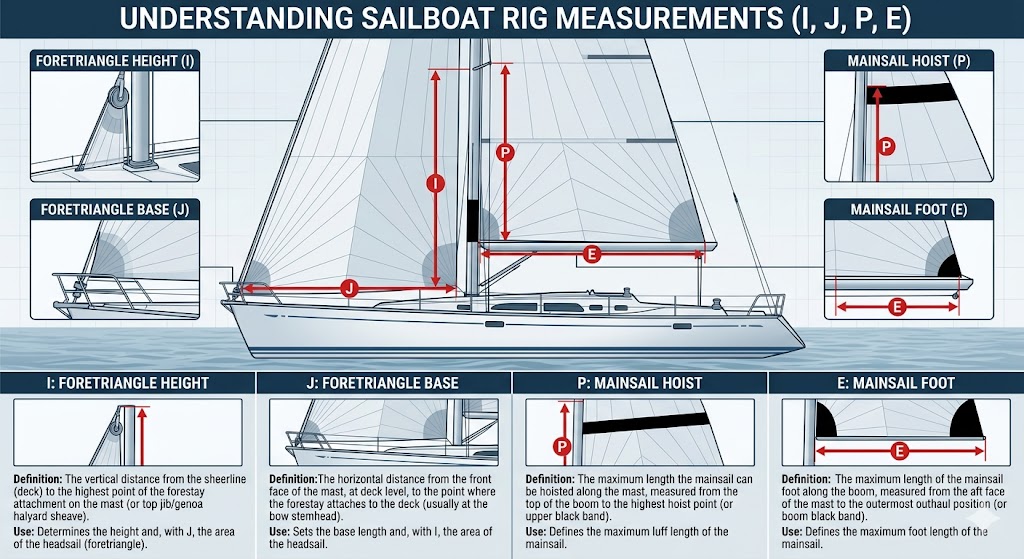
Rig Dimensions
I (Foretriangle Height)
16.67
J (Foretriangle Base)
16.00 ft / 4.88 m
P (Mainsail Luff)
686.00 ft² / 63.73 m²
E (Mainsail Foot)
Gray Marine
Engine & Accommodations
Horsepower
25
How It Compares
vs. Allied 39, Cc 40 1, Cc 40 Crusader, Columbia 40, Offshore 40 Cheoy Lee