Back to Search
Wasa 38
Designer: Leif Ängermark  ·  Builder: Wasa Marin A.b.  ·  First built: 1980
+ Add to Compare
About the Wasa 38

Built in Sweden during the 1970s and 1980s, the Wasa 38 is a capable bluewater cruiser that earned a solid reputation among Scandinavian sailors for its robust construction and seaworthy design. Produced by Wasa Yachts, the boat reflects the practical, no-nonsense approach to offshore sailing that characterizes many vessels from that era and region. Designed with serious passagemaking in mind, the Wasa 38 offers a comfortable balance between performance and stability, making it well suited to coastal cruising and offshore voyaging alike. Its hull form prioritizes seakeeping qualities over outright speed, giving owners confidence in challenging conditions. The build quality is generally regarded as strong, consistent with the high standards associated with Scandinavian boatbuilding of the period. For those researching a used boat purchase, the Wasa 38 represents an honest, capable cruiser that rewards diligent maintenance and careful inspection. Examples on the market today vary in condition and equipment level, so a thorough survey is essential. Sailors looking for a reliable offshore passage-maker with classic Scandinavian heritage will find the Wasa 38 a worthy candidate worth exploring further.

Core Dimensions
LOA (Length Overall) 37.30 ft / 11.37 m
LWL (Waterline Length) 28.50 ft / 8.69 m
Beam 11.58 ft / 3.53 m
Max Draft 6.70 ft / 2.04 m
Displacement 11,000.00 lb / 4,990 kg
Ballast 4,850.00 lb / 2,200 kg
Sail Area (Reported) 646.00 ft² / 60.02 m²
Design & Construction
Hull Type Fin w/spade rudder
Rigging Type Fractional Sloop
Construction FG
Designer Leif Ängermark
Builder Wasa Marin A.B.
First Built 1980
Owner Reviews

No owner reviews yet — be the first to share your experience with this boat.

Known Issues & What to Watch For

No known issues documented for this model yet.

Own or have surveyed a Wasa 38? Submit a known issue
Performance Ratios
PHRF Rating PHRF (Performance Handicap Racing Fleet) is a national racing handicap measured in seconds per nautical mile. Lower values indicate faster boats. Ratings are sourced from US Sailing's national database (median across 60+ regional fleets).
Under 0 — Ultralight racer0–90 — Performance racer90–150 — Cruiser/racer150–210 — Typical cruiserOver 210 — Heavy/slow cruiser
84
SA/Displacement Sail Area to Displacement ratio measures how much sail power a boat has relative to its weight. Higher values mean more performance and speed.
Under 14 — Heavy cruiser, slow14–18 — Cruising sailboat18–22 — Cruiser/racerOver 22 — Performance racer
20.97
Comfort Ratio Ted Brewer's Comfort Ratio predicts how comfortable a boat will feel in offshore conditions. Higher values mean a steadier, more comfortable motion in a seaway.
Under 20 — Uncomfortably rough20–30 — Acceptable coastal30–40 — Good offshore comfortOver 40 — Very comfortable offshore
20.91
Capsize Screening Formula The USHS Capsize Screening Formula estimates offshore capsize risk. Lower is safer — values under 2.0 are considered acceptable for offshore sailing.
Under 2.0 — Safe for offshore2.0–2.2 — Borderline offshoreOver 2.2 — Coastal use recommended
2.09
Hull Speed Hull Speed is the theoretical maximum speed of a displacement hull, calculated from waterline length. Most cruising sailboats reach this speed in moderate conditions. 7.15
S# (Speed Number) The Speed Number (S#) is a quick performance index. Higher values indicate a faster, more powerful design relative to its size.
Under 3.0 — Slow cruiser3.0–5.0 — Average cruiser5.0–7.0 — Performance cruiserOver 7.0 — Racer
2.98
Pounds/Inch Immersion Pounds per Inch Immersion (PPI) tells you how much weight is needed to sink the boat one inch. Useful for calculating how additional gear and stores affect waterline. 1.0
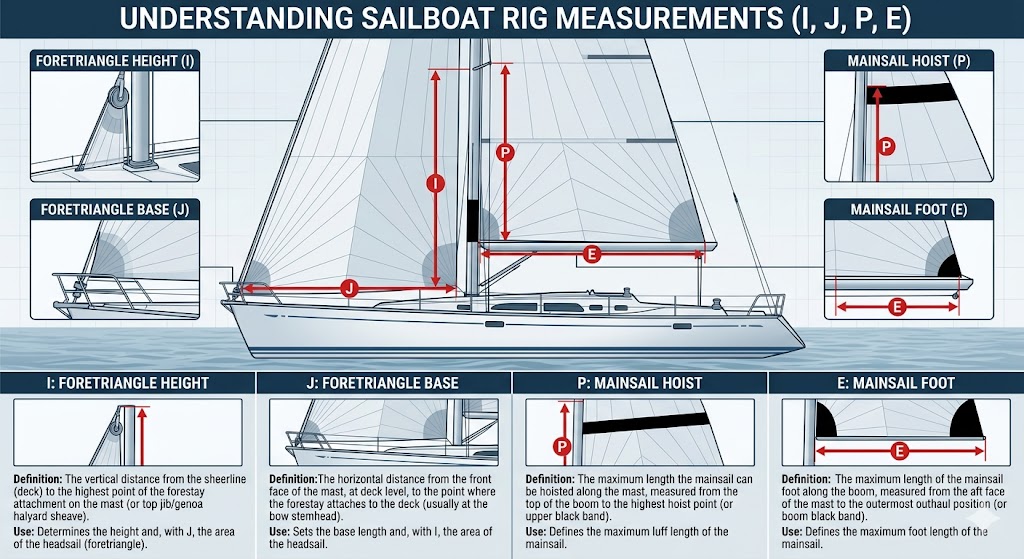
Rig Dimensions
I (Foretriangle Height) 42.33
J (Foretriangle Base) 13.17
P (Mainsail Luff) 45.75
E (Mainsail Foot) 16.07
SA Fore 278.74
SA Main 367.6
How It Compares

vs. Pearson 37 2, Selection 37 Jeanneau, Tartan 372

This boat Similar boats
Dimensions
LOA
Wasa 38 ★
37.3 ft
Pearson 37 2
37.4 ft
Selection 37 Jeanneau
37.2 ft
Tartan 372
37.2 ft
LWL
Wasa 38 ★
28.5 ft
Pearson 37 2
29.6 ft
Selection 37 Jeanneau
29.3 ft
Tartan 372
30.8 ft
Beam
Wasa 38 ★
11.6 ft
Pearson 37 2
12.3 ft
Selection 37 Jeanneau
10.7 ft
Tartan 372
12.3 ft
Displacement
Wasa 38 ★
11 lbs
Pearson 37 2
16 lbs
Selection 37 Jeanneau
9 lbs
Tartan 372
15 lbs
Ballast
Wasa 38 ★
4 lbs
Pearson 37 2
6 lbs
Selection 37 Jeanneau
2 lbs
Tartan 372
6 lbs
Sail Area
Wasa 38 ★
646 sq ft
Pearson 37 2
661 sq ft
Selection 37 Jeanneau
592 sq ft
Tartan 372
Performance
PHRF Rating (lower = faster)
Wasa 38 ★
84 s/nm
Pearson 37 2
102 s/nm
Selection 37 Jeanneau
Tartan 372
SA / Displacement (higher = more powerful)
Wasa 38 ★
21.0
Pearson 37 2
16.7
Selection 37 Jeanneau
20.5
Tartan 372
Ballast / Disp (higher = stiffer)
Wasa 38 ★
Pearson 37 2
37.5 %
Selection 37 Jeanneau
24.3 %
Tartan 372
42.8 %
Comfort Ratio (higher = more comfortable offshore)
Wasa 38 ★
20.9
Pearson 37 2
27.3
Selection 37 Jeanneau
20.8
Tartan 372
Capsize Screening (lower = safer)
Wasa 38 ★
2.09
Pearson 37 2
1.96
Selection 37 Jeanneau
1.99
Tartan 372
Displacement / Length (lower = lighter)
Wasa 38 ★
Pearson 37 2
275
Selection 37 Jeanneau
176
Tartan 372
231
Hull Speed
Wasa 38 ★
7.2 kts
Pearson 37 2
7.3 kts
Selection 37 Jeanneau
7.3 kts
Tartan 372
Speed Number (higher = faster)
Wasa 38 ★
3.0
Pearson 37 2
1.9
Selection 37 Jeanneau
3.4
Tartan 372
Find a Wasa 38 For Sale