Back to Search
Triton Pearson Yawl
Designer: Carl Alberg  ·  Builder: Pearson Yachts (Usa)  ·  First built: 1958
+ Add to Compare
Videos
About the Triton Pearson Yawl

Designed by renowned naval architect Carl Alberg and first launched in 1958, this classic fiberglass yacht represents one of the most beloved small cruisers ever produced. The Triton earned its reputation as a seaworthy pocket cruiser capable of serious offshore passages, with numerous examples completing ocean crossings and circumnavigations despite their modest 28-foot length. Alberg's conservative design philosophy shines through in the Triton's long keel configuration and heavy displacement of 6,930 pounds, creating exceptional stability and tracking ability. The masthead yawl rig provides versatile sail handling options, particularly valuable when short-handed or in challenging conditions. With a comfort ratio of 27.35, this boat offers the motion characteristics of much larger vessels, making extended passages more pleasant for crew. The Triton's moderate sail area of 395 square feet and SA/Displacement ratio of 17.44 reflect its cruising-oriented nature rather than racing ambitions. While not particularly fast with a hull speed of 6.21 knots, it compensates with predictable handling and remarkable seaworthiness. The capsize screening formula of 1.73 indicates good stability for offshore work. Pearson Yachts' solid fiberglass construction has proven durable over decades, with many examples still actively cruising today, testament to both the design's integrity and build quality.

Core Dimensions
LOA (Length Overall) 28.33 ft / 8.63 m
LWL (Waterline Length) 21.50 ft / 6.55 m
Beam 8.25 ft / 2.51 m
Max Draft 3.92 ft / 1.19 m
Displacement 6,930.00 lb / 3,143 kg
Ballast 3,019.00 lb / 1,369 kg
Ballast Type Lead
Sail Area (Reported) 395.00 ft² / 36.70 m²
Design & Construction
Hull Type Long Keel
Rigging Type Masthead Yawl
Construction FG
Designer Carl Alberg
Builder Pearson Yachts (USA)
First Built 1958
Associations Pearson Yacht Owners Portal
Owner Reviews

No owner reviews yet — be the first to share your experience with this boat.

Known Issues & What to Watch For
Medium Hull/Deck
Early Pearson Triton hulls used a relatively thin fiberglass layup by modern standards, and the deck-to-hull joint on many early boats was mechanically fastened and bedded rather than through-bolted with backing plates, leading to chronic leaks and joint separation over decades of use.
1958–1965 models
Medium Hull/Deck
The balsa-cored deck sections used in some Triton builds are prone to water intrusion around deck hardware, leading to soft spots and core rot. Tap testing the deck thoroughly is essential, particularly around winch bases, cleats, and stanchion bases.
Medium Hull/Deck
The Triton's fiberglass hull was hand-laid in the late 1950s and early 1960s using early resin and mat/woven roving combinations that can show significant resin starvation or dry spots in some hulls. These appear as delamination pockets, particularly in the topsides.
1958–1963 models
High Keel
The external ballast keel is cast iron on most Tritons, attached with iron keel bolts that are highly susceptible to corrosion. Keel bolt condition is a critical survey item; many boats of this age have never had bolts replaced or even inspected, and rusted bolts can fail structurally.
High Keel
The keel-to-hull joint on the Triton frequently weeps rust staining from corroding cast iron keel bolts. Interior inspection of the bilge sump often reveals rust streaks or soft glasswork around the bolt tops, indicating advanced corrosion.
Medium Engine
Most original Tritons were fitted with the Universal Atomic 4 gasoline engine, which is now very old and difficult to source parts for. Many boats have had engine conversions; buyers should verify whether the original Atomic 4 remains and assess its condition carefully, or confirm a reputable diesel conversion was done properly.
Medium Engine
Diesel conversion installations on Tritons vary widely in quality. Engine mounts, shaft alignment, cutlass bearing, and stuffing box should all be carefully inspected, as amateur conversions sometimes result in misaligned shafts and vibration problems.
Medium Rigging
The Triton yawl's mizzen chainplates are deck-mounted and prone to leaking where they pass through the deck, particularly on boats where the original bedding compound has dried and cracked over 50+ years. This often results in hidden rot or delamination in the surrounding deck structure.
High Rigging
Original chainplates on the Triton are typically bronze or mild steel straps glassed or bolted to the hull interior. After 60+ years, many are corroded, fatigued, or inadequately attached, and should be considered for replacement regardless of apparent external condition.
Medium Accommodations
The Triton's interior woodwork used teak and mahogany with frames and liners that can hide water intrusion damage behind them. Water that enters through deck leaks often pools unseen behind the interior liner, causing hull-side delamination or wood framing rot that is not visible without partial disassembly.
Medium Electrical
Electrical systems on surviving Tritons are typically 50–60 years old and have often been modified repeatedly by multiple owners. Original wiring, if still present, is likely to have deteriorated insulation and undersized conductors by modern standards; a full rewire is common and often necessary.

Own or have surveyed a Triton Pearson Yawl? Submit a known issue
Performance Ratios
SA/Displacement Sail Area to Displacement ratio measures how much sail power a boat has relative to its weight. Higher values mean more performance and speed.
Under 14 — Heavy cruiser, slow14–18 — Cruising sailboat18–22 — Cruiser/racerOver 22 — Performance racer
17.44
Ballast/Displacement Ballast to Displacement ratio shows what percentage of the boat's total weight is ballast. Higher values generally mean better initial stability and stiffer sail carrying.
30–35% — Typical cruiser35–45% — Stiff performance boatOver 45% — Racing oriented
43.56
Displacement/Length Displacement to Length ratio measures how heavy a boat is relative to its waterline length. Lower values mean a lighter, faster boat.
Under 100 — Ultralight racer100–200 — Light cruiser/racer200–300 — Moderate cruiser300–400 — Heavy cruiserOver 400 — Very heavy
311.29
Comfort Ratio Ted Brewer's Comfort Ratio predicts how comfortable a boat will feel in offshore conditions. Higher values mean a steadier, more comfortable motion in a seaway.
Under 20 — Uncomfortably rough20–30 — Acceptable coastal30–40 — Good offshore comfortOver 40 — Very comfortable offshore
27.35
Capsize Screening Formula The USHS Capsize Screening Formula estimates offshore capsize risk. Lower is safer — values under 2.0 are considered acceptable for offshore sailing.
Under 2.0 — Safe for offshore2.0–2.2 — Borderline offshoreOver 2.2 — Coastal use recommended
1.73
Hull Speed Hull Speed is the theoretical maximum speed of a displacement hull, calculated from waterline length. Most cruising sailboats reach this speed in moderate conditions. 6.21 kn
S# (Speed Number) The Speed Number (S#) is a quick performance index. Higher values indicate a faster, more powerful design relative to its size.
Under 3.0 — Slow cruiser3.0–5.0 — Average cruiser5.0–7.0 — Performance cruiserOver 7.0 — Racer
1.52
Pounds/Inch Immersion Pounds per Inch Immersion (PPI) tells you how much weight is needed to sink the boat one inch. Useful for calculating how additional gear and stores affect waterline. 633.78 pounds/inch
SA/Displacement (Calc) Calculated Sail Area to Displacement ratio using actual measured sail dimensions rather than reported values. More precise than the reported SA/Disp figure. 15.06
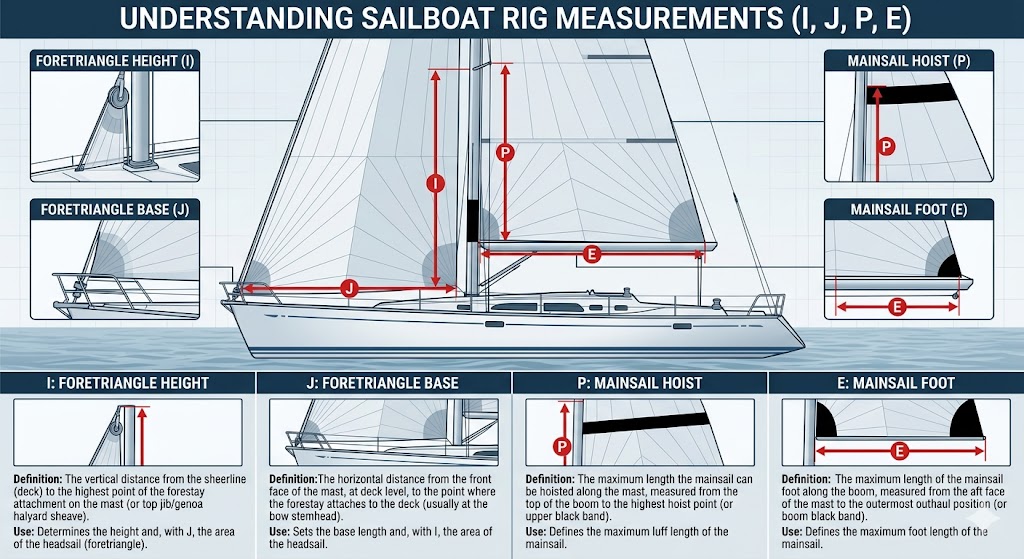
Rig Dimensions
I (Foretriangle Height) 28.50 ft / 8.69 m
J (Foretriangle Base) 9.80 ft / 2.99 m
P (Mainsail Luff) 31.00 ft / 9.45 m
E (Mainsail Foot) 13.00 ft / 3.96 m
SA Fore 139.65 ft² / 12.97 m²
SA Main 201.50 ft² / 18.72 m²
SA Total (100%) 341.15 ft² / 31.69 m²
Est. Forestay Length 30.14 ft / 9.19 m
Engine & Accommodations
Engine Make Universal
Engine Model Atomic 4
Engine Type Gas
How It Compares

vs. Hallberg Rassy P 28, Sea Rover 28, Triton Pearson, Twister 28 Holman, Westsail 28

This boat Similar boats
Dimensions
LOA
Triton Pearson Yawl ★
28.3 ft
Hallberg Rassy P 28
28.3 ft
Sea Rover 28
28.3 ft
Triton Pearson
28.3 ft
Twister 28 Holman
28.3 ft
Westsail 28
28.3 ft
LWL
Triton Pearson Yawl ★
21.5 ft
Hallberg Rassy P 28
21.0 ft
Sea Rover 28
24.0 ft
Triton Pearson
21.5 ft
Twister 28 Holman
21.5 ft
Westsail 28
23.5 ft
Beam
Triton Pearson Yawl ★
8.3 ft
Hallberg Rassy P 28
7.8 ft
Sea Rover 28
8.5 ft
Triton Pearson
8.3 ft
Twister 28 Holman
8.1 ft
Westsail 28
9.6 ft
Displacement
Triton Pearson Yawl ★
6 lbs
Hallberg Rassy P 28
6 lbs
Sea Rover 28
8 lbs
Triton Pearson
6 lbs
Twister 28 Holman
9 lbs
Westsail 28
13 lbs
Ballast
Triton Pearson Yawl ★
3 lbs
Hallberg Rassy P 28
Sea Rover 28
4 lbs
Triton Pearson
3 lbs
Twister 28 Holman
4 lbs
Westsail 28
4 lbs
Sail Area
Triton Pearson Yawl ★
395 sq ft
Hallberg Rassy P 28
Sea Rover 28
Triton Pearson
Twister 28 Holman
348 sq ft
Westsail 28
Performance
SA / Displacement (higher = more powerful)
Triton Pearson Yawl ★
17.4
Hallberg Rassy P 28
Sea Rover 28
Triton Pearson
Twister 28 Holman
12.1
Westsail 28
Ballast / Disp (higher = stiffer)
Triton Pearson Yawl ★
43.6 %
Hallberg Rassy P 28
Sea Rover 28
44.6 %
Triton Pearson
43.6 %
Twister 28 Holman
Westsail 28
31.1 %
Comfort Ratio (higher = more comfortable offshore)
Triton Pearson Yawl ★
27.4
Hallberg Rassy P 28
Sea Rover 28
Triton Pearson
Twister 28 Holman
40.5
Westsail 28
Capsize Screening (lower = safer)
Triton Pearson Yawl ★
1.73
Hallberg Rassy P 28
Sea Rover 28
Triton Pearson
Twister 28 Holman
1.50
Westsail 28
Displacement / Length (lower = lighter)
Triton Pearson Yawl ★
311
Hallberg Rassy P 28
329
Sea Rover 28
289
Triton Pearson
311
Twister 28 Holman
Westsail 28
464
Hull Speed
Triton Pearson Yawl ★
6.2 kts
Hallberg Rassy P 28
Sea Rover 28
Triton Pearson
Twister 28 Holman
6.2 kts
Westsail 28
Speed Number (higher = faster)
Triton Pearson Yawl ★
1.5
Hallberg Rassy P 28
Sea Rover 28
Triton Pearson
Twister 28 Holman
0.7
Westsail 28
Find a Triton Pearson Yawl For Sale