Back to Search
Triton Pearson
Designer: Carl Alberg  ·  Builder: Pearson Yachts-Usa/Jouet-France  ·  First built: 1958
+ Add to Compare
About the Triton Pearson

Among Pearson's most celebrated designs, the Triton stands as a testament to Carl Alberg's genius for creating seaworthy pocket cruisers that punch well above their weight class. This compact fiberglass sailboat earned legendary status during the 1960s and early 1970s for its remarkable ability to handle serious offshore conditions while remaining manageable for small crews. Built with Pearson's renowned quality standards, the Triton features classic proportions that prioritize safety and comfort over outright speed. Her full keel design and moderate sail plan create exceptional stability and tracking ability, making her particularly well-suited for coastal cruising and short-handed sailing. The boat's reputation for seaworthiness has been proven time and again by countless ocean crossings and challenging passages. While her accommodations are necessarily compact, the Triton's interior layout maximizes every inch of available space with typical Alberg efficiency. Her cockpit provides a secure sailing platform with excellent visibility and protection from the elements. Today, well-maintained examples remain highly sought after by sailors who appreciate traditional design values and proven performance, particularly those seeking an affordable entry into serious cruising sailing.

Core Dimensions
LOA (Length Overall) 28.33 ft / 8.63 m
LWL (Waterline Length) 21.50 ft / 6.55 m
Beam 8.25 ft / 2.51 m
Max Draft 3.92 ft / 1.19 m
Displacement 6,930.00 lb / 3,143 kg
Ballast 3,019.00 lb / 1,369 kg
Ballast Type Lead
Design & Construction
Hull Type Long Keel
Rigging Type Fractional Sloop
Construction FG (solid laminate)
Designer Carl Alberg
Builder Pearson Yachts-USA/Jouet-France
First Built 1958
Last Built 1967
Owner Reviews

No owner reviews yet — be the first to share your experience with this boat.
Performance Ratios
Ballast/Displacement Ballast to Displacement ratio shows what percentage of the boat's total weight is ballast. Higher values generally mean better initial stability and stiffer sail carrying.
30–35% — Typical cruiser35–45% — Stiff performance boatOver 45% — Racing oriented
43.56
Displacement/Length Displacement to Length ratio measures how heavy a boat is relative to its waterline length. Lower values mean a lighter, faster boat.
Under 100 — Ultralight racer100–200 — Light cruiser/racer200–300 — Moderate cruiser300–400 — Heavy cruiserOver 400 — Very heavy
311.29
Pounds/Inch Immersion Pounds per Inch Immersion (PPI) tells you how much weight is needed to sink the boat one inch. Useful for calculating how additional gear and stores affect waterline. 3.8 pounds/inch
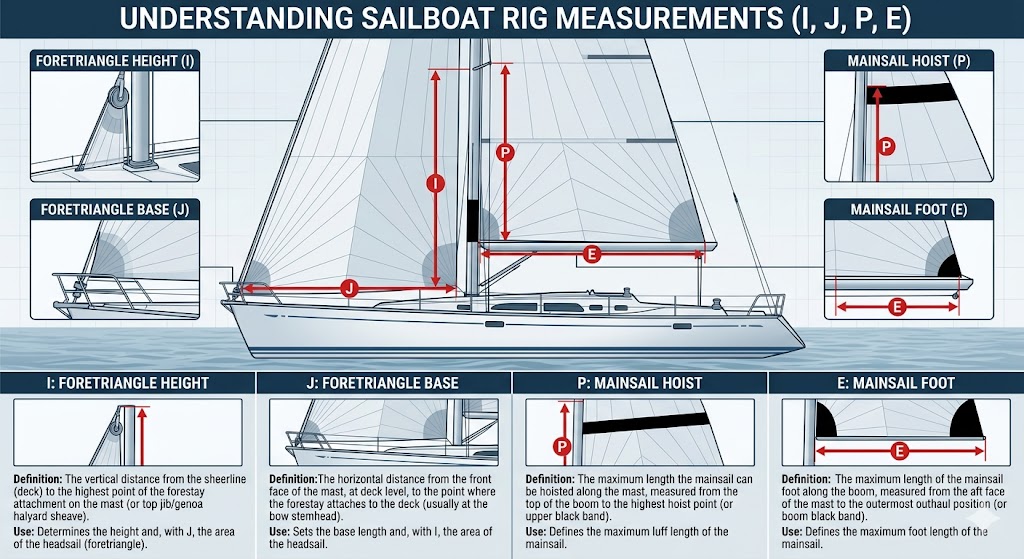
Rig Dimensions
I (Foretriangle Height) 16.38
J (Foretriangle Base) 9.80 ft / 2.99 m
P (Mainsail Luff) 371.00 ft² / 34.47 m²
E (Mainsail Foot) Universal
Engine & Accommodations
Horsepower 30
Find a Triton Pearson For Sale