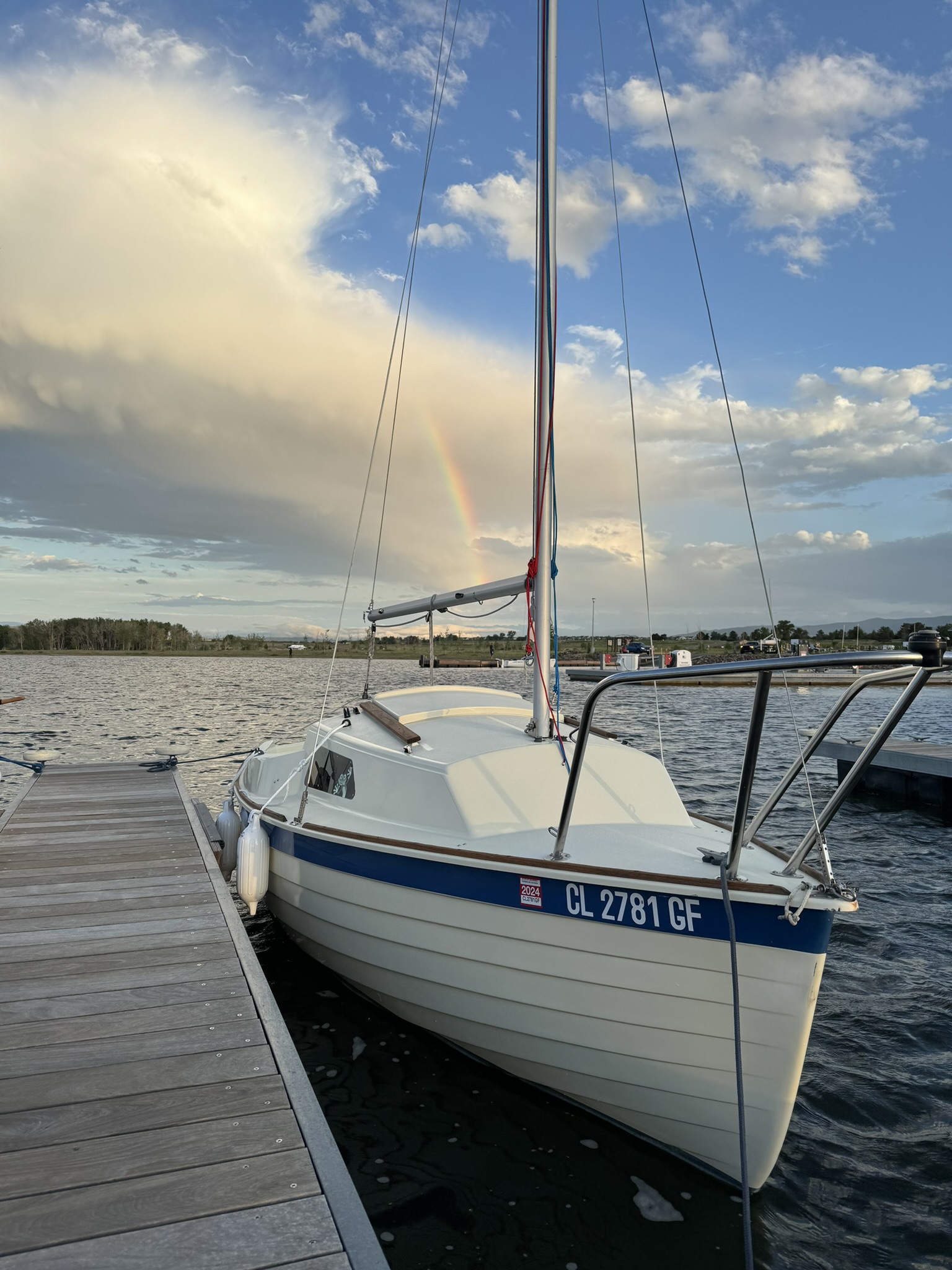
Based on the model designation, this appears to be a 15-foot sailboat that would fall into the small boat category, making it suitable for protected waters, small lakes, and nearshore coastal sailing. Boats of this size typically serve as excellent training platforms for new sailors or as fun weekend recreation for experienced sailors seeking a simple, responsive sailing experience.
The Montgomery designation suggests this may have been produced by a smaller boatbuilder or as part of a limited production run, which could explain the scarcity of detailed specifications and widespread recognition. Small sailboats like this often feature straightforward rigging systems, modest sail plans, and relatively stable handling characteristics that make them approachable for sailors of various skill levels.
Market Price Estimate
Beta
Small sample size. This estimate is based on fewer than 5 listings and may not be representative of the true market. Use with caution.
$6,500 – $6,500
typical asking price
Median $6,500 ·
2 listings used
All listings
$6,500 – $6,500 2
Rate a listing price
$
About this estimate
Prices are based on recent asking prices from public listings — not actual sale prices, which are typically lower.
Condition is not factored in. A well-maintained boat with new sails and engine can be worth significantly more than a project boat of the same model.
Location affects price. Boats in landlocked states or areas with fewer buyers often sell for less than those on the coast.
Year of manufacture is not filtered. Older examples of this model will generally be priced lower than newer ones.
Included equipment varies widely. A boat with a full suite of electronics, dodger, and new standing rigging may command a large premium.
Outliers are automatically excluded using statistical filtering to improve accuracy, but some bad data may remain.
The Montgomery 15 is one my favorite boats I have ever owned. Its easy to launch and easy to step the mast. Despite its size we regularly sail with 2 adults and 2 small children. The build quality is excellent.
SA/Displacement
Sail Area to Displacement ratio measures how much sail power a boat has relative to its weight. Higher values mean more performance and speed.
Under 14 — Heavy cruiser, slow14–18 — Cruising sailboat18–22 — Cruiser/racerOver 22 — Performance racer
23.64
Ballast/Displacement
Ballast to Displacement ratio shows what percentage of the boat's total weight is ballast. Higher values generally mean better initial stability and stiffer sail carrying.
Displacement/Length
Displacement to Length ratio measures how heavy a boat is relative to its waterline length. Lower values mean a lighter, faster boat.
Under 100 — Ultralight racer100–200 — Light cruiser/racer200–300 — Moderate cruiser300–400 — Heavy cruiserOver 400 — Very heavy
96.52
Comfort Ratio
Ted Brewer's Comfort Ratio predicts how comfortable a boat will feel in offshore conditions. Higher values mean a steadier, more comfortable motion in a seaway.
Under 20 — Uncomfortably rough20–30 — Acceptable coastal30–40 — Good offshore comfortOver 40 — Very comfortable offshore
5.54
Capsize Screening Formula
The USHS Capsize Screening Formula estimates offshore capsize risk. Lower is safer — values under 2.0 are considered acceptable for offshore sailing.
Under 2.0 — Safe for offshore2.0–2.2 — Borderline offshoreOver 2.2 — Coastal use recommended
2.82
Hull Speed
Hull Speed is the theoretical maximum speed of a displacement hull, calculated from waterline length. Most cruising sailboats reach this speed in moderate conditions.
4.83 kn
Pounds/Inch Immersion
Pounds per Inch Immersion (PPI) tells you how much weight is needed to sink the boat one inch. Useful for calculating how additional gear and stores affect waterline.
1.53 pounds/inch
How It Compares
vs. Coronado 15, Harpoon 46, Mutineer 15, Precision 15 Cb, West Wight Potter 15