Back to Search
Freedom 33
Designer: J. Paris/Garry Hoyt  ·  Builder: Tillotson Pearson Inc, (Usa)  ·  First built: 1979
+ Add to Compare
Videos
About the Freedom 33

Built by Tillotson Pearson from 1979 to 1983, this innovative cat ketch represents a fascinating chapter in sailing history. Designed by J. Paris and Garry Hoyt, the Freedom 33 pioneered the unstayed rig concept, featuring freestanding carbon fiber masts that eliminated the traditional web of shrouds and stays. This revolutionary approach promised simplified sailing with fewer components to maintain or fail. At 34.75 feet overall with a 30-foot waterline, the boat offers respectable accommodations while maintaining manageable size for coastal cruising and occasional offshore passages. The moderate displacement of 12,000 pounds and 3,800-pound ballast provide decent stability, though the unique keel/centerboard configuration allows for shoal-water exploration when needed. With 516 square feet of sail area distributed across two wishbone-rigged sails, the Freedom 33 delivers comfortable cruising performance rather than racing speed. The unstayed rig's forgiving nature makes it particularly appealing to short-handed sailors or those seeking low-maintenance sailing. However, potential buyers should research parts availability and find mechanics familiar with the specialized rig system, as the unique design requires specific knowledge for proper maintenance and repair.

Market Price Estimate Beta
Small sample size. This estimate is based on fewer than 5 listings and may not be representative of the true market. Use with caution.
$18,900 – $18,900
typical asking price
Median $18,900  ·  1 listing used
All listings
$18,900 – $18,900 1
Rate a listing price
$
About this estimate
  • Prices are based on recent asking prices from public listings — not actual sale prices, which are typically lower.
  • Condition is not factored in. A well-maintained boat with new sails and engine can be worth significantly more than a project boat of the same model.
  • Location affects price. Boats in landlocked states or areas with fewer buyers often sell for less than those on the coast.
  • Year of manufacture is not filtered. Older examples of this model will generally be priced lower than newer ones.
  • Included equipment varies widely. A boat with a full suite of electronics, dodger, and new standing rigging may command a large premium.
  • Outliers are automatically excluded using statistical filtering to improve accuracy, but some bad data may remain.
Core Dimensions
LOA (Length Overall) 34.75 ft / 10.59 m
LWL (Waterline Length) 30.00 ft / 9.14 m
Beam 11.00 ft / 3.35 m
Max Draft 7.50 ft / 2.29 m
Min Draft 3.50 ft / 1.07 m
Displacement 12,000.00 lb / 5,443 kg
Ballast 3,800.00 lb / 1,724 kg
Ballast Type Lead
Sail Area (Reported) 516.00 ft² / 47.94 m²
Design & Construction
Hull Type Keel/Cbrd.
Rigging Type Cat Ketch (unstayed)
Construction FG
Designer J. Paris/Garry Hoyt
Builder Tillotson Pearson Inc, (USA)
First Built 1979
Last Built 1983
Associations FreedomYachts.org
Owner Reviews

No owner reviews yet — be the first to share your experience with this boat.

Known Issues & What to Watch For
High Rigging
The Freedom 33 uses an unstayed cat ketch rig with free-standing carbon fiber or fiberglass masts. The mast partners and deck compression posts must be inspected carefully for cracking and delamination, as the unstayed masts transmit significant bending loads directly into the deck structure.
Medium Rigging
The wishbone booms used on both masts are prone to corrosion at the jaw fittings and pivot points. Original aluminum wishbones from early production are difficult to source replacement hardware for and should be inspected for cracks at the joints.
High Hull/Deck
The deck collar and partner area around the free-standing masts is a known water intrusion point. The fiberglass sleeve that supports the mast at deck level can develop cracks and crazing, allowing water to migrate into the deck core and surrounding laminate.
Medium Hull/Deck
The centerboard trunk, which runs through the interior, is a common source of leaks on hull/centerboard versions. The trunk-to-hull joint can weep water into the bilge and cabin sole area, and the trunk walls can develop stress cracks from repeated board cycling.
Medium Keel
On centerboard models, the centerboard pivot pin and cable system are prone to corrosion and wear. The stainless pivot pin can seize or corrode, and the pendant or cable controlling the board frequently needs replacement. Confirming the board raises and lowers freely is essential.
Medium Sails
The original Freedom 33 wrap-around or sleeve sails designed for the free-standing rig are proprietary and not interchangeable with standard sails. Replacement sails must be custom-made for the wishbone cat ketch configuration, making replacement expensive and sourcing difficult.
Medium Hull/Deck
Tillotson-Pearson used balsa core in deck construction during this era. Stanchion bases, cleats, and any deck hardware that has been re-bedded or disturbed should be probed for soft or wet core, as balsa saturation is common around penetrations.
Low Accommodations
The interior joinery on early Freedom 33s used lightweight materials to save weight consistent with the performance-oriented design philosophy. Tabbing of interior furniture to the hull can loosen over time and should be checked for delamination from the hull liner.

Own or have surveyed a Freedom 33? Submit a known issue
Performance Ratios
PHRF Rating PHRF (Performance Handicap Racing Fleet) is a national racing handicap measured in seconds per nautical mile. Lower values indicate faster boats. Ratings are sourced from US Sailing's national database (median across 60+ regional fleets).
Under 0 — Ultralight racer0–90 — Performance racer90–150 — Cruiser/racer150–210 — Typical cruiserOver 210 — Heavy/slow cruiser
141
SA/Displacement Sail Area to Displacement ratio measures how much sail power a boat has relative to its weight. Higher values mean more performance and speed.
Under 14 — Heavy cruiser, slow14–18 — Cruising sailboat18–22 — Cruiser/racerOver 22 — Performance racer
15.81
Ballast/Displacement Ballast to Displacement ratio shows what percentage of the boat's total weight is ballast. Higher values generally mean better initial stability and stiffer sail carrying.
30–35% — Typical cruiser35–45% — Stiff performance boatOver 45% — Racing oriented
31.67
Displacement/Length Displacement to Length ratio measures how heavy a boat is relative to its waterline length. Lower values mean a lighter, faster boat.
Under 100 — Ultralight racer100–200 — Light cruiser/racer200–300 — Moderate cruiser300–400 — Heavy cruiserOver 400 — Very heavy
198.41
Comfort Ratio Ted Brewer's Comfort Ratio predicts how comfortable a boat will feel in offshore conditions. Higher values mean a steadier, more comfortable motion in a seaway.
Under 20 — Uncomfortably rough20–30 — Acceptable coastal30–40 — Good offshore comfortOver 40 — Very comfortable offshore
24.21
Capsize Screening Formula The USHS Capsize Screening Formula estimates offshore capsize risk. Lower is safer — values under 2.0 are considered acceptable for offshore sailing.
Under 2.0 — Safe for offshore2.0–2.2 — Borderline offshoreOver 2.2 — Coastal use recommended
1.93
Hull Speed Hull Speed is the theoretical maximum speed of a displacement hull, calculated from waterline length. Most cruising sailboats reach this speed in moderate conditions. 7.34 kn
Pounds/Inch Immersion Pounds per Inch Immersion (PPI) tells you how much weight is needed to sink the boat one inch. Useful for calculating how additional gear and stores affect waterline. 1,179.13 pounds/inch
SA/Displacement (Calc) Calculated Sail Area to Displacement ratio using actual measured sail dimensions rather than reported values. More precise than the reported SA/Disp figure. 9.5
Rig Dimensions
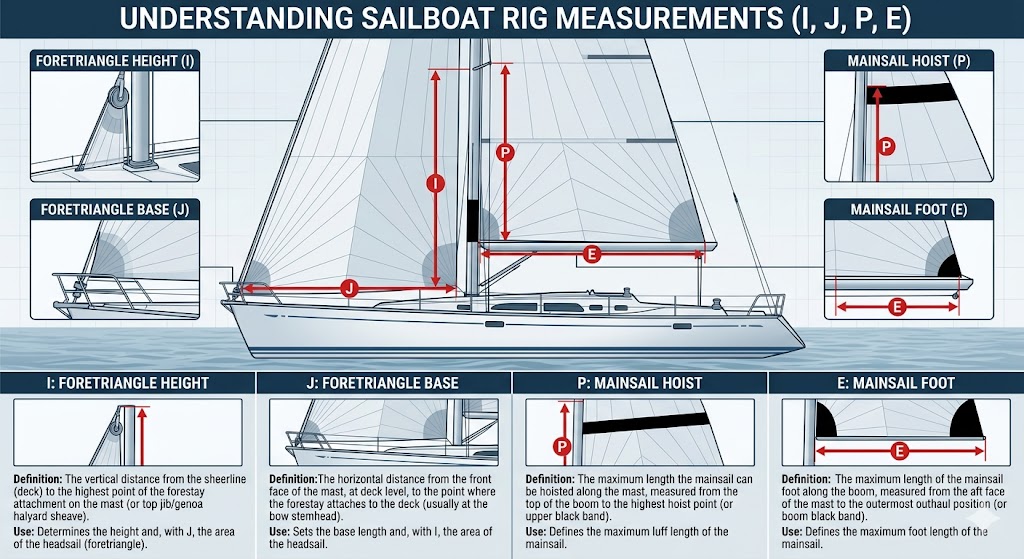
P (Mainsail Luff) 38.75 ft / 11.81 m
E (Mainsail Foot) 16.00 ft / 4.88 m
SA Main 310.00 ft² / 28.80 m²
SA Total (100%) 310.00 ft² / 28.80 m²
Engine & Accommodations
Engine Make Yanmar
Engine Model 2QM
Engine Type Diesel
Horsepower 18
Fuel Capacity 25 gals / 95 L
Water Capacity 53 gals / 201 L
How It Compares

vs. Bristol 35, Cc 35 3, Ericson 35 2

This boat Similar boats
Dimensions
LOA
Freedom 33 ★
34.8 ft
Bristol 35
34.7 ft
Cc 35 3
34.7 ft
Ericson 35 2
34.7 ft
LWL
Freedom 33 ★
30.0 ft
Bristol 35
23.8 ft
Cc 35 3
28.0 ft
Ericson 35 2
25.8 ft
Beam
Freedom 33 ★
11.0 ft
Bristol 35
10.0 ft
Cc 35 3
11.2 ft
Ericson 35 2
10.0 ft
Displacement
Freedom 33 ★
12 lbs
Bristol 35
12 lbs
Cc 35 3
10 lbs
Ericson 35 2
11 lbs
Ballast
Freedom 33 ★
3 lbs
Bristol 35
5 lbs
Cc 35 3
4 lbs
Ericson 35 2
5 lbs
Sail Area
Freedom 33 ★
516 sq ft
Bristol 35
529 sq ft
Cc 35 3
Ericson 35 2
533 sq ft
Performance
PHRF Rating (lower = faster)
Freedom 33 ★
141 s/nm
Bristol 35
189 s/nm
Cc 35 3
Ericson 35 2
SA / Displacement (higher = more powerful)
Freedom 33 ★
15.8
Bristol 35
15.8
Cc 35 3
Ericson 35 2
16.7
Ballast / Disp (higher = stiffer)
Freedom 33 ★
31.7 %
Bristol 35
Cc 35 3
41.6 %
Ericson 35 2
Comfort Ratio (higher = more comfortable offshore)
Freedom 33 ★
24.2
Bristol 35
33.3
Cc 35 3
Ericson 35 2
29.3
Capsize Screening (lower = safer)
Freedom 33 ★
1.93
Bristol 35
1.73
Cc 35 3
Ericson 35 2
1.77
Displacement / Length (lower = lighter)
Freedom 33 ★
198
Bristol 35
Cc 35 3
220
Ericson 35 2
Hull Speed
Freedom 33 ★
7.3 kts
Bristol 35
6.5 kts
Cc 35 3
Ericson 35 2
6.8 kts
Speed Number (higher = faster)
Freedom 33 ★
Bristol 35
1.0
Cc 35 3
Ericson 35 2
1.7
Find a Freedom 33 For Sale