Back to Search
Alberg 37
Designer: Carl Alberg  ·  Builder: Whitby Boat Works Ltd. (Can)  ·  First built: 1967
+ Add to Compare
Videos
About the Alberg 37

Known for its robust construction and seaworthy design, this classic sailboat represents Carl Alberg's commitment to creating vessels that prioritize safety and comfort over speed. The Alberg 37 embodies the traditional design philosophy that made the naval architect famous throughout the 1960s and 1970s. Built with a full keel and heavy displacement hull, this yacht excels at coastal cruising and extended offshore passages where stability and predictable handling matter more than racing performance. The generous beam and deep cockpit create a secure feeling for crew, while the spacious interior accommodates extended cruising with practical layouts that maximize livability. Alberg's designs earned a reputation for being forgiving boats that inspire confidence in challenging conditions. The 37 continues this tradition with its solid construction and conservative sail plan that makes it manageable for smaller crews. While not built for speed, the boat's ability to carry substantial loads and maintain course in heavy weather has made it a favorite among serious cruising sailors. This model appeals particularly to sailors seeking a dependable platform for coastal exploration or those planning longer passages where comfort and seaworthiness take precedence over performance racing characteristics.

Market Price Estimate Beta
Small sample size. This estimate is based on fewer than 5 listings and may not be representative of the true market. Use with caution.
$27,500 – $27,500
typical asking price
Median $27,500  ·  1 listing used
All listings
$27,500 – $27,500 1
Rate a listing price
$
About this estimate
  • Prices are based on recent asking prices from public listings — not actual sale prices, which are typically lower.
  • Condition is not factored in. A well-maintained boat with new sails and engine can be worth significantly more than a project boat of the same model.
  • Location affects price. Boats in landlocked states or areas with fewer buyers often sell for less than those on the coast.
  • Year of manufacture is not filtered. Older examples of this model will generally be priced lower than newer ones.
  • Included equipment varies widely. A boat with a full suite of electronics, dodger, and new standing rigging may command a large premium.
  • Outliers are automatically excluded using statistical filtering to improve accuracy, but some bad data may remain.
Core Dimensions
LOA (Length Overall) 37.17 ft / 11.33 m
LWL (Waterline Length) 26.50 ft / 8.08 m
Beam 10.17 ft / 3.10 m
Max Draft 5.50 ft / 1.68 m
Displacement 16,800.00 lb / 7,620 kg
Ballast 6,500.00 lb / 2,948 kg
Ballast Type Lead
Design & Construction
Hull Type Long Keel
Rigging Type Masthead Sloop
Construction FG
Designer Carl Alberg
Builder Whitby Boat Works Ltd. (CAN)
First Built 1967
Last Built 1988
Number Built 248
Owner Reviews

No owner reviews yet — be the first to share your experience with this boat.

Known Issues & What to Watch For
High Hull/Deck
The deck-to-hull joint on early Whitby-built Alberg 37s used an inward-turning flange bonded and through-bolted, but the toerail often traps moisture against this joint. Delamination and water intrusion at this seam is a well-documented problem, often hidden beneath the toerail. Careful probing and moisture metering along the entire rail is essential.
1967–1978 models
High Hull/Deck
The balsa-cored deck used throughout much of production is prone to moisture saturation, particularly around chainplates, stanchion bases, and deck hardware where bedding compounds have failed. Soft spots and delamination are common findings during survey.
High Keel
The long keel is an integral fiberglass structure with an internal ballast casting; however, the keel-to-hull joint along the garboard area is prone to stress cracking and weeping, particularly on boats that have been dried out or grounded. Inspect closely for persistent weeping or staining at the keel root.
High Hull/Deck
Chainplate knees are glassed directly to the hull liner and inner hull. The fiberglass tabbing on older boats has been known to crack or separate, allowing chainplates to work slightly and introducing deck leaks and structural looseness. Inspect all chainplate attachment points from below.
High Rigging
The mast is keel-stepped, and the mast compression post bears on a wooden pad that is prone to compression rot and softening over time. The step area in the bilge should be inspected for soft or deteriorated wood beneath the aluminum mast step casting.
High Hull/Deck
The rudder on the Alberg 37 is a full-length hung rudder with a wooden core. Moisture intrusion into the rudder core causes rot and delamination, evidenced by soft areas, weeping at the lower pintle, or rudder flex under load. Rudder replacement or recore is a known maintenance item on aging examples.
Medium Accommodations
Interior teak and holly plywood sole panels and structural wood components such as berth frames and bulkhead bases are prone to rot where bilge water or deck leaks have been chronic. Check all plywood bulkhead bases and sole supports carefully, as these also provide structural support to the hull liner.
Medium Engine
Early boats were fitted with the Universal Atomic 4 gasoline engine. Many have been converted to diesel (typically Westerbeke or Yanmar), but conversions vary widely in quality. Verify the engine type, age, and whether any conversion was done professionally with proper fuel tank, exhaust, and ventilation changes.
1967–1978 models
Medium Electrical
Original wiring in boats from the late 1960s and 1970s used non-tinned copper wire that corrodes in the marine environment. Many boats have had partial rewiring over the decades, resulting in mixed-generation wiring with unreliable connections and potential fire hazards. A full electrical audit is strongly recommended on unrestored examples.
1967–1980 models
Medium Hull/Deck
The original portlights and opening hatches on early production boats used aluminum frames that are prone to galvanic corrosion and seal failure where they pass through the cored deck, allowing chronic water intrusion into the deck core. Check surrounding deck areas with a moisture meter.
1967–1979 models

Own or have surveyed a Alberg 37? Submit a known issue
Performance Ratios
PHRF Rating PHRF (Performance Handicap Racing Fleet) is a national racing handicap measured in seconds per nautical mile. Lower values indicate faster boats. Ratings are sourced from US Sailing's national database (median across 60+ regional fleets).
Under 0 — Ultralight racer0–90 — Performance racer90–150 — Cruiser/racer150–210 — Typical cruiserOver 210 — Heavy/slow cruiser
162
Ballast/Displacement Ballast to Displacement ratio shows what percentage of the boat's total weight is ballast. Higher values generally mean better initial stability and stiffer sail carrying.
30–35% — Typical cruiser35–45% — Stiff performance boatOver 45% — Racing oriented
38.69
Displacement/Length Displacement to Length ratio measures how heavy a boat is relative to its waterline length. Lower values mean a lighter, faster boat.
Under 100 — Ultralight racer100–200 — Light cruiser/racer200–300 — Moderate cruiser300–400 — Heavy cruiserOver 400 — Very heavy
403.02
Pounds/Inch Immersion Pounds per Inch Immersion (PPI) tells you how much weight is needed to sink the boat one inch. Useful for calculating how additional gear and stores affect waterline. 5.78 pounds/inch
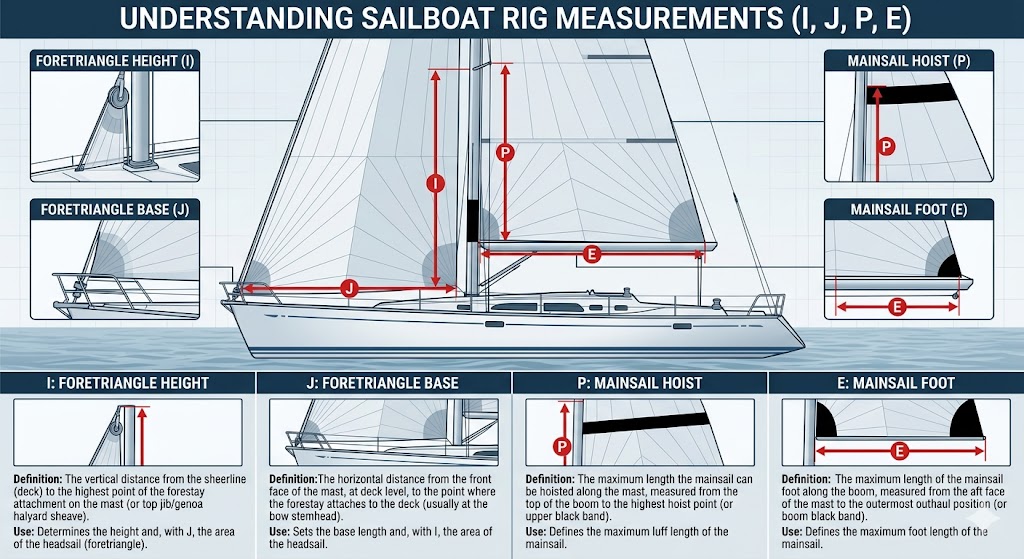
Rig Dimensions
I (Foretriangle Height) 15.82
J (Foretriangle Base) 14.00 ft / 4.27 m
P (Mainsail Luff) 646.00 ft² / 60.02 m²
E (Mainsail Foot) Volvo
Engine & Accommodations
Horsepower 23
Fuel Capacity 35 gals / 132 L
Water Capacity 60 gals / 227 L
How It Compares

vs. Irwin 37 3, Island Trader 38, Ohlson 38

This boat Similar boats
Dimensions
LOA
Alberg 37 ★
37.2 ft
Irwin 37 3
37.0 ft
Island Trader 38
37.3 ft
Ohlson 38
37.1 ft
LWL
Alberg 37 ★
26.5 ft
Irwin 37 3
30.0 ft
Island Trader 38
30.3 ft
Ohlson 38
27.6 ft
Beam
Alberg 37 ★
10.2 ft
Irwin 37 3
11.5 ft
Island Trader 38
12.0 ft
Ohlson 38
10.1 ft
Displacement
Alberg 37 ★
16 lbs
Irwin 37 3
20 lbs
Island Trader 38
26 lbs
Ohlson 38
14 lbs
Ballast
Alberg 37 ★
6 lbs
Irwin 37 3
7 lbs
Island Trader 38
7 lbs
Ohlson 38
6 lbs
Sail Area
Alberg 37 ★
Irwin 37 3
630 sq ft
Island Trader 38
567 sq ft
Ohlson 38
586 sq ft
Performance
PHRF Rating (lower = faster)
Alberg 37 ★
162 s/nm
Irwin 37 3
Island Trader 38
219 s/nm
Ohlson 38
152 s/nm
SA / Displacement (higher = more powerful)
Alberg 37 ★
Irwin 37 3
13.7
Island Trader 38
10.3
Ohlson 38
15.5
Ballast / Disp (higher = stiffer)
Alberg 37 ★
38.7 %
Irwin 37 3
39.0 %
Island Trader 38
26.5 %
Ohlson 38
Comfort Ratio (higher = more comfortable offshore)
Alberg 37 ★
Irwin 37 3
37.2
Island Trader 38
46.0
Ohlson 38
35.0
Capsize Screening (lower = safer)
Alberg 37 ★
Irwin 37 3
1.70
Island Trader 38
1.62
Ohlson 38
1.64
Displacement / Length (lower = lighter)
Alberg 37 ★
403
Irwin 37 3
330
Island Trader 38
422
Ohlson 38
Hull Speed
Alberg 37 ★
Irwin 37 3
7.3 kts
Island Trader 38
7.4 kts
Ohlson 38
7.0 kts
Speed Number (higher = faster)
Alberg 37 ★
Irwin 37 3
1.3
Island Trader 38
Ohlson 38
1.5
Find a Alberg 37 For Sale