Hunter 27 Buyer's Guide
Everything you need to know before buying a used Hunter 27 — history, all versions and variants, what years to look for, common problems to inspect, and real price data from 11 active listings.
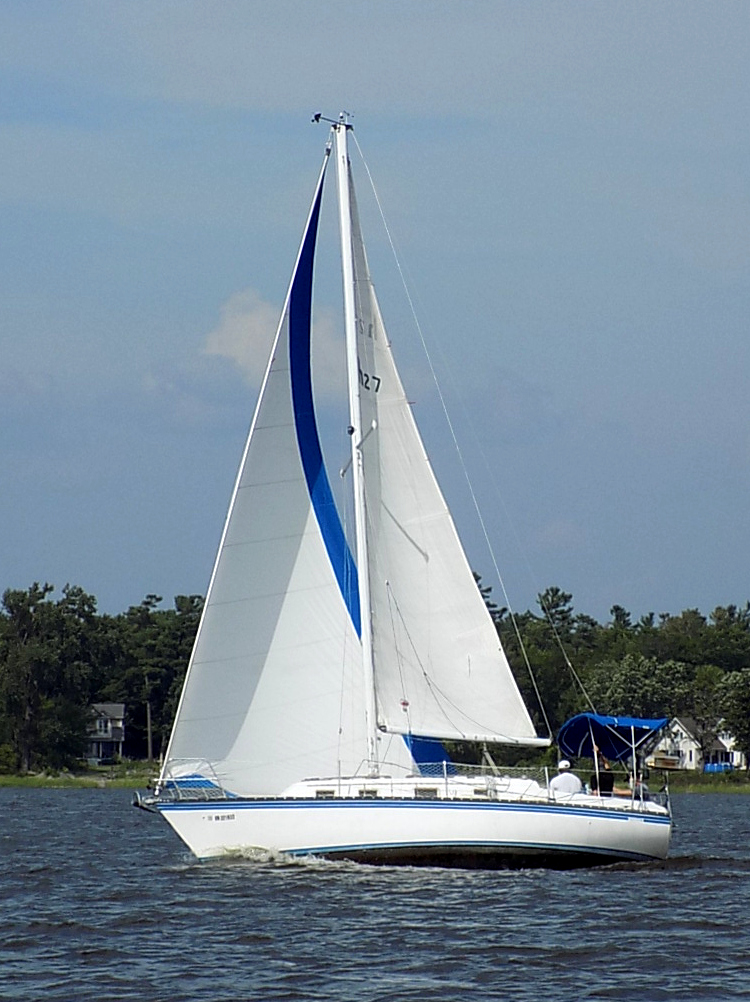
Overview & History
The Hunter 27 is one of the most successful and enduring designs in American production sailing. Built by Hunter Marine Corporation — the Florida-based builder founded by Warren Luhrs in 1973 — the Hunter 27 became a cornerstone of the affordable cruising market through the late 1970s and 1980s. Hunter Marine understood something that many builders missed: most sailors don't need a bluewater passagemaker. They need a comfortable, well-priced coastal cruiser that won't bankrupt them to buy, maintain, or insure.
The Hunter 27 delivered on all three counts. Designed by John Cherubini and introduced in 1974, the boat was produced until the late 1980s with approximately 2,000 hulls built. With its generous beam, comfortable cockpit, and straightforward sloop rig, the boat offered more interior space than competitors at its price point and handled well enough to keep experienced sailors satisfied.
The sheer number of Hunter 27s built means parts are available, surveyors know the boat, and an active used market ensures you can be selective rather than settling. It's one of the few boats where being a budget buyer doesn't mean compromising on community support.
Key Specifications
The Hunter 27's proportions reflect its priorities: a wide, stable beam for comfortable coastal sailing, moderate displacement, and a simple masthead sloop rig that's easy to manage single-handed or with a small crew. Here are the core numbers from the Keel Index spec page:
| LOA | 26.67 ft (8.13 m) |
| LWL | 22.25 ft (6.78 m) |
| Beam | 9.83 ft (3.00 m) |
| Max Draft (fin keel) | 4.42 ft (1.35 m) |
| Min Draft (centerboard up) | 2.00 ft (0.61 m) |
| Displacement | 6,900 lb (3,130 kg) |
| Ballast | 2,900 lb (42% ballast ratio) |
| Sail Area | 367 ft² |
| Hull Type | Fin keel or swing keel/centerboard |
| Rigging | Masthead sloop |
| SA/Displacement | ~15.0 (moderate cruiser) |
| Comfort Ratio | ~18–20 |
| Capsize Formula | ~2.1 (coastal use recommended) |
| Hull Speed | ~6.1 knots |
| Headroom | 6'1" (1.85 m) |
| Fuel capacity | 6–13 gallons (varies by model year) |
| Water capacity | 20–30 gallons (varies by model year) |
The capsize screening formula of approximately 2.1 puts the Hunter 27 firmly in the coastal-use category. This is a Great Lakes, ICW, and coastal cruiser — not a bluewater boat. The comfort ratio in the high teens to low twenties reflects the lightweight construction: the boat is lively and fun in a breeze, but motion can be quick in a seaway. These aren't criticisms — they're honest characterizations of a boat built to a price point for coastal sailing, and the Hunter 27 excels at exactly that mission.
Versions & Variants
Hunter Marine produced multiple variants of the 27-foot platform over more than a decade, and navigating the differences is important before you start shopping. Hull number, model year, and keel configuration all affect what you're actually looking at — and some variants are significantly more desirable than others.
| Variant | Years | Key Features | Desirability |
|---|---|---|---|
| Hunter 27 Original |
1974–1981 | Original hull and deck design. Mostly outboard-powered. Basic interior. Tiller steering standard. | Fair — lower prices reflect age and dated hardware |
| Hunter 27 Keel/CB Centerboard option |
1977–1989 | Swing or centerboard keel version for shoal-draft sailing. Draws as little as 2 ft with board up. Popular for trailering and inland lakes. | Good for shoal-draft needs; requires keel mechanism inspection |
| Hunter 27-2 Second series |
1982–1989 | Updated interior layout with improved galley and nav area. Better hardware and deck hardware layout. Some boats added small inboard options. Improved standing rigging attachment points. | Best — the sweet spot for most buyers |
| Hunter 27 Sloop Late production |
1985–1989 | Later production boats with refinements from Hunter's updated manufacturing processes. Better fit and finish, cleaner deck hardware routing, and available with small inboard diesel options. | Good — newer is generally better for condition reasons |
The keel/centerboard question
The single biggest configuration decision when shopping for a Hunter 27 is fin keel versus centerboard. The fin keel version (~4.4 ft draft) is stiffer, sails better to windward, and has no mechanical keel system to fail. The centerboard version (~2.0 ft draft with board up) opens up gunkholing possibilities, ICW travel, and trailering options that the fin keel can't match.
Centerboard boats require careful inspection of the keel trunk, the pivot pin or hinge mechanism, and the cable or tackle used to raise and lower the board. These systems are maintenance items — not inherently problematic, but ones that can be neglected. A properly maintained centerboard is a genuine asset; an ignored one can be a costly repair. Ask when the keel was last serviced and request a demonstration before you buy.
Inboard vs. outboard
Many Hunter 27s — particularly early models — were sold with outboard power only, typically using a bracket and well system. Some owners have since retrofitted small inboard diesels (Yanmar 1GM or 2GM are popular choices). If the boat you're considering has an inboard, verify it was professionally installed — a DIY inboard retrofit in a small boat can introduce fuel, exhaust, and water intrusion issues if done improperly. If it has an outboard, that's not a deal-breaker, but it does limit passage-making capability in no-wind conditions.
What Years to Buy
Early boats (1974–1981) — proceed with caution
The oldest Hunter 27s are now approaching 50 years old. Early hulls have variable build quality as Hunter was still refining its production processes. Hardware is dated and often unavailable. These boats can be perfectly good sailors, but the smart buyer prices in a significant refit budget. The advantage: they're cheap. A $2,000–$4,000 early Hunter 27 can be a legitimate bargain for someone who enjoys boat projects — but go in eyes open.
The sweet spot (1982–1989) — target these
By the early 1980s, Hunter had ironed out most of its early production quirks. The Hunter 27-2 and late-production boats offer better hardware, improved interior layouts, and cleaner builds. These boats are old enough to be affordable ($5,000–$12,000 range) while having more remaining life than the earliest examples. A well-maintained 1985–1988 Hunter 27 in good condition is a compelling package — enough boat to cruise seriously, at a price that leaves budget for proper sails and safety equipment.
How It Sails
The Hunter 27 is a fun, spirited coastal sailing boat — more so than its reputation as a "starter boat" sometimes suggests. Hunter's designers prioritized initial stability and a lively feel under sail, and the boat delivers. In 10–18 knots of breeze, the Hunter 27 moves briskly and rewards good sail trim. The boat is particularly pleasant on a beam reach, which is where most coastal cruising miles get logged.
Like most lightweight fiberglass production boats of its era, the Hunter 27 is not at its best in light air. Below 8 knots, you're looking at gentle progress or motorsailing. Owners who sail in light-air climates (the Pacific Northwest, parts of the Southeast) often add a larger genoa or a cruising spinnaker to compensate. This is an easy and inexpensive upgrade that meaningfully changes the boat's light-air performance.
Upwind performance is adequate for a cruising boat but not exciting. The Hunter 27 won't win races against a similarly-sized performance boat, but it will get there — and reliably. The boat tacks easily and the cockpit ergonomics are well-designed for a short-handed crew. A couple can comfortably manage the Hunter 27 in a wide range of conditions.
In heavy air (20+ knots), the boat responds well to an early reef. The lightweight construction means the Hunter 27 can feel a bit corky in a short, steep chop — the motion is quick rather than the long, rolling motion of a heavier displacement cruiser. This is manageable, but sailors sensitive to motion sickness should be aware.
Common Problems to Inspect
The Hunter 27 is a well-built coastal cruiser, but like any 35–47-year-old fiberglass boat, it has known weak points. A professional marine survey is non-negotiable before purchase. Here's what to focus on:
Deck hardware leaks
The most common and pervasive issue on older Hunter 27s is leaking deck hardware — stanchion bases, chainplate deck fittings, mast partners, and cockpit hardware. The boats use a cored deck construction, and water intrusion through hardware penetrations over decades causes core delamination and rot. Press firmly on the deck around all hardware penetrations. Any softness, sponginess, or cracking of the gelcoat near hardware indicates moisture in the core. Localized repairs are manageable; widespread deck core rot is a major expense ($3,000–$8,000+ depending on extent). Use a moisture meter.
Chainplates
Hunter 27 chainplates are mounted inboard through the deck, and the deck penetrations are a chronic leak source. Beyond the deck leak risk, the chainplates themselves can corrode — inspect them carefully for rust, pitting, or elongation of the attachment holes. Chainplate replacement on a Hunter 27 typically runs $800–$2,000 depending on whether the deck needs work at the same time. If they haven't been replaced or inspected in the last 15 years, add this to your survey checklist.
Centerboard mechanism (swing-keel models only)
On centerboard models, inspect the keel trunk for cracks, the pivot hardware for corrosion, and the raising/lowering mechanism (cable, line, or tackle) for wear. A seized or heavily corroded centerboard pivot can range from a nuisance (needs greasing and cleaning) to a significant repair (keel trunk work). Have a diver inspect the keel exterior while the boat is in the water, and test the board operation yourself before buying. Budget $500–$2,500 for centerboard mechanism work if it hasn't been maintained.
Standing rigging
Wire standing rigging has a recommended service life of 10 years. On a 35–47-year-old boat, the rigging has almost certainly been replaced at least once — but verify when. Look for meat hooks (broken wire strands), corrosion at swage fittings, and fatigue cracking at toggles and turnbuckles. A full re-rig on a Hunter 27 typically costs $1,500–$3,500, less if you use rod rigging or budget hardware. This is a consumable item, not a defect — just price it into your offer if the rigging is original or unknown-age.
Engine installation (inboard models)
If the boat has an inboard diesel, ask for service records and inspect the installation carefully. Hunter 27 inboards were often owner-installed or retrofit by small yards — the quality varies enormously. Look for proper seacock placement, correctly routed exhaust (siphon break present), good stuffing box condition, and evidence of regular oil changes. A well-maintained Yanmar 1GM or 2GM with 500–1,000 hours has decades of life left; an unknown-hour engine with no service history is a liability. Survey the engine compartment carefully.
Osmotic blistering
Like many fiberglass boats of the 1970s and 1980s, Hunter 27s are susceptible to osmotic blistering below the waterline. Inspect the bottom closely out of the water for blisters. Minor blistering is very common and manageable with a proper barrier coat application ($1,000–$2,500 at a yard, or DIY). Severe blistering with large, deep blisters indicates more significant moisture intrusion and a more expensive repair. A moisture meter reading on the hull below the waterline is a standard part of a good marine survey.
Prices & What to Pay
The Hunter 27 is one of the most affordable entry points into cruising sailboat ownership. The large number of boats built, combined with their age, means prices are generally accessible for buyers on a budget — but the range is wide depending on condition, keel type, power configuration, and sail inventory.
Based on 11 active listings in our database, here's what the market looks like right now:
What different price points get you
- Under $3,000 — Project boats, early hulls with significant deferred maintenance, boats with failed sails or unknown engine condition. Legitimate for someone who enjoys restoration and has the skills. Budget $3,000–$8,000 in additional work before you sail far.
- $3,000–$6,000 — Older boats in fair condition, possibly with tired sails, outboard power, and cosmetic issues. Good value if you're handy and willing to spend weekends doing maintenance in year one.
- $6,000–$10,000 — The sweet spot. Well-maintained early-to-mid-1980s boats with serviceable sails, working engine (inboard or reliable outboard), and no major survey findings. This is where most buyers find the best value.
- $10,000–$14,000 — Later production boats or early boats with recent significant investment: new standing rigging, newer sails, inboard diesel, updated electronics. These are "sail away" boats with minimal immediate expense.
Use the Keel Index price estimator to see how any specific asking price compares to current market comps.
Ownership & Community
The Hunter 27 benefits from the wider Hunter Marine owners community — one of the most active in production cruising sailboats. The Hunter Owners Association is the primary community resource, with technical forums, classifieds, and model-specific discussions. The Hunter 27 section is active enough that almost any problem you encounter has been documented and solved by a previous owner.
The Sailboat Owners forums have extensive Hunter 27 archives. Cruising forums like Cruisers Forum and Sailing Anarchy have Hunter-specific threads worth reading before you buy. The broad fleet size means you'll find knowledgeable fellow owners within driving distance of almost any sailing area in North America.
Parts availability is generally good for the standard hardware. Hunter Marine is still in business (now as Hunter Marine, a subsidiary) and some factory parts are available, though the 27 has been out of production for 35+ years. Generic marine hardware from West Marine or online suppliers covers most maintenance needs. The mechanical simplicity of the Hunter 27 — simple sloop rig, straightforward systems — is itself a form of parts availability: less can go wrong, and what does go wrong is fixable with common hardware.
Bottom Line
The Hunter 27 earns its reputation as one of the best entry-level cruising sailboats ever built. The combination of low purchase price, simple systems, good interior volume for the LOA, and a large, active support community makes it a compelling first boat for sailors ready to move beyond day sailing. The limitations — modest offshore capability, aging construction in many hulls, and the complications of the centerboard models — are real, but they're honest and well-understood.
For coastal sailors, Great Lakes cruisers, ICW snowbirds in training, and first-time boat buyers who want to learn on something forgiving without a catastrophic financial commitment, the Hunter 27 remains one of the best answers in the used market. Buy the best condition you can afford, always get a survey, and pay particular attention to the deck hardware and chainplates.
Ready to Research?
View the full Hunter 27 specs, performance ratios, and live price estimates on Keel Index.
View Hunter 27 Specs → Browse All Sailboats