Back to Search
Valiant 37
Designer: Robert Perry  ·  Builder: Nordic/Uniflite  ·  First built: 1977
+ Add to Compare
Videos
About the Valiant 37

Designed by renowned naval architect Robert Perry and built by Nordic/Uniflite starting in 1977, this 37-footer represents classic American cruising boat design from the late 1970s. With only 50 hulls produced, the Valiant 37 has achieved something of a cult following among serious cruising sailors who appreciate its blend of seaworthiness and sailing performance. Perry's design emphasizes offshore capability, evident in the boat's substantial 17,000-pound displacement and conservative sail plan. The cutter rig configuration provides excellent sail handling options for varying conditions, while the fin keel with rudder on skeg offers a good compromise between performance and directional stability. At 31.58 feet on the waterline, she achieves a respectable hull speed of 7.53 knots. The comfort ratio of 30.59 indicates a motion that favors stability over speed, making long passages more comfortable for the crew. Her capsize screening formula of 1.79 suggests good stability characteristics suitable for offshore work. The moderate sail area to displacement ratio of 16.2 points to a boat that will perform adequately in light to moderate conditions while remaining manageable when the wind picks up, making her well-suited for serious coastal and offshore cruising.

Core Dimensions
LOA (Length Overall) 37.00 ft / 11.28 m
LWL (Waterline Length) 31.58 ft / 9.63 m
Beam 11.50 ft / 3.51 m
Max Draft 5.80 ft / 1.77 m
Displacement 17,000.00 lb / 7,711 kg
Ballast 6,700.00 lb / 3,039 kg
Sail Area (Reported) 667.00 ft² / 61.97 m²
Design & Construction
Hull Type Fin with rudder on skeg
Rigging Type Cutter
Construction FG
Designer Robert Perry
Builder Nordic/Uniflite
First Built 1977
Number Built 50
Owner Reviews

No owner reviews yet — be the first to share your experience with this boat.

Known Issues & What to Watch For
High Hull/Deck
Early Valiant 37s were built by Uniflite with a balsa-cored deck. The balsa core around chainplates, stanchion bases, and hardware fittings is prone to moisture intrusion and rot when fastener bedding fails. Core samples or moisture meters around all deck hardware are essential.
1977–1982 models
Medium Hull/Deck
The hull-to-deck joint on early production boats used a through-bolted external aluminum toerail to clamp the joint. Corrosion of the aluminum extrusion and backing plates is common, and the joint itself can admit water if sealant has deteriorated.
pre-1983 models
High Keel
The lead keel is attached with stainless steel keel bolts that pass through a relatively thin sump area. Galvanic interaction between the stainless bolts and lead keel can cause crevice corrosion in the bolt threads within the keel; the keel-to-hull interface should be inspected closely for cracking or weeping.
High Hull/Deck
The skeg supporting the rudder is an integral fiberglass structure but has been reported to develop hairline cracks at the skeg-to-hull junction, particularly on boats with hard offshore miles. This area should be carefully inspected for stress cracking that may indicate structural fatigue.
High Rigging
The chainplate design on early boats routes internal chainplates through the deck with limited ability to inspect the below-deck portion. Chainplate knees and their tabbing to the hull interior should be inspected for delamination or cracking, as failures have been reported on heavily used offshore boats.
1977–1984 models
Medium Hull/Deck
The cockpit locker lids and bridgedeck area on early models were lightly constructed and can flex or crack under load. Offshore sailors have upgraded these for compliance with offshore safety standards; verify condition and any modifications.
pre-1985 models
Low Accommodations
The teak interior joinery common to this era of Valiant 37 production used thin veneers over plywood substrates. Prolonged exposure to bilge moisture or cabin condensation causes the plywood to delaminate and the teak veneer to bubble and separate, particularly beneath the settees and in the forward cabin.
Medium Engine
Many early Valiant 37s were delivered with the Westerbeke 30 or 40 diesel, installed in a somewhat tight engine room that makes access to the raw water impeller and heat exchanger difficult. Overheating due to neglected raw water system maintenance is a documented recurring issue on these boats.

Own or have surveyed a Valiant 37? Submit a known issue
Performance Ratios
SA/Displacement Sail Area to Displacement ratio measures how much sail power a boat has relative to its weight. Higher values mean more performance and speed.
Under 14 — Heavy cruiser, slow14–18 — Cruising sailboat18–22 — Cruiser/racerOver 22 — Performance racer
16.2
Ballast/Displacement Ballast to Displacement ratio shows what percentage of the boat's total weight is ballast. Higher values generally mean better initial stability and stiffer sail carrying.
30–35% — Typical cruiser35–45% — Stiff performance boatOver 45% — Racing oriented
39.41
Displacement/Length Displacement to Length ratio measures how heavy a boat is relative to its waterline length. Lower values mean a lighter, faster boat.
Under 100 — Ultralight racer100–200 — Light cruiser/racer200–300 — Moderate cruiser300–400 — Heavy cruiserOver 400 — Very heavy
240.97
Comfort Ratio Ted Brewer's Comfort Ratio predicts how comfortable a boat will feel in offshore conditions. Higher values mean a steadier, more comfortable motion in a seaway.
Under 20 — Uncomfortably rough20–30 — Acceptable coastal30–40 — Good offshore comfortOver 40 — Very comfortable offshore
30.59
Capsize Screening Formula The USHS Capsize Screening Formula estimates offshore capsize risk. Lower is safer — values under 2.0 are considered acceptable for offshore sailing.
Under 2.0 — Safe for offshore2.0–2.2 — Borderline offshoreOver 2.2 — Coastal use recommended
1.79
Hull Speed Hull Speed is the theoretical maximum speed of a displacement hull, calculated from waterline length. Most cruising sailboats reach this speed in moderate conditions. 7.53 kn
S# (Speed Number) The Speed Number (S#) is a quick performance index. Higher values indicate a faster, more powerful design relative to its size.
Under 3.0 — Slow cruiser3.0–5.0 — Average cruiser5.0–7.0 — Performance cruiserOver 7.0 — Racer
2.18
Pounds/Inch Immersion Pounds per Inch Immersion (PPI) tells you how much weight is needed to sink the boat one inch. Useful for calculating how additional gear and stores affect waterline. 1,297.65 pounds/inch
SA/Displacement (Calc) Calculated Sail Area to Displacement ratio using actual measured sail dimensions rather than reported values. More precise than the reported SA/Disp figure. 16.2
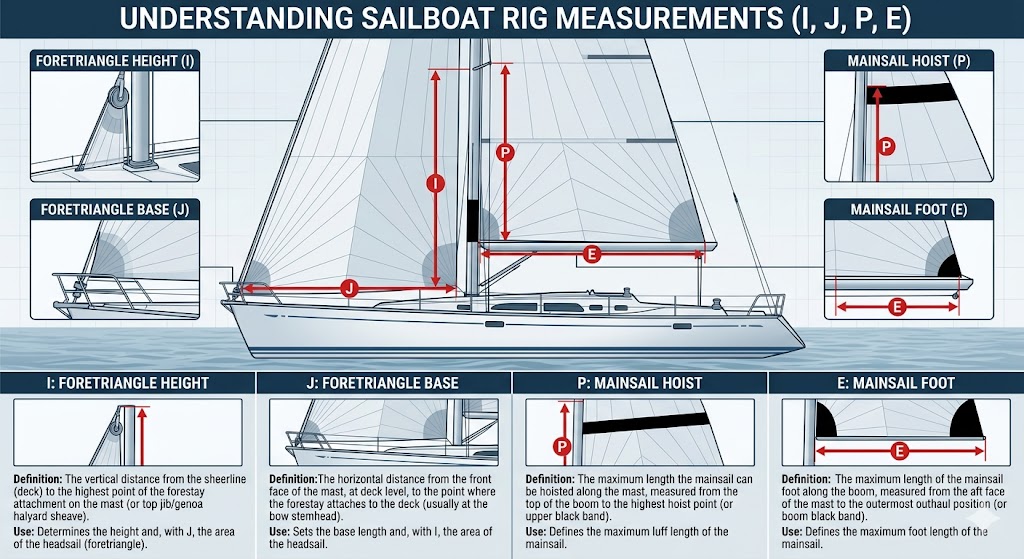
Rig Dimensions
I (Foretriangle Height) 49.00 ft / 14.94 m
J (Foretriangle Base) 16.00 ft / 4.88 m
P (Mainsail Luff) 44.00 ft / 13.41 m
E (Mainsail Foot) 12.50 ft / 3.81 m
SA Fore 392.00 ft² / 36.42 m²
SA Main 275.00 ft² / 25.55 m²
SA Total (100%) 667.00 ft² / 61.97 m²
Est. Forestay Length 51.55 ft / 15.71 m
Engine & Accommodations
Engine Make Westerbeke
Engine Type Diesel
How It Compares

vs. Endeavour 37, Pacific Seacraft 37, Passport 37

This boat Similar boats
Dimensions
LOA
Valiant 37 ★
37.0 ft
Endeavour 37
37.0 ft
Pacific Seacraft 37
36.9 ft
Passport 37
37.0 ft
LWL
Valiant 37 ★
31.6 ft
Endeavour 37
30.0 ft
Pacific Seacraft 37
27.8 ft
Passport 37
29.6 ft
Beam
Valiant 37 ★
11.5 ft
Endeavour 37
11.6 ft
Pacific Seacraft 37
10.8 ft
Passport 37
11.9 ft
Displacement
Valiant 37 ★
17 lbs
Endeavour 37
20 lbs
Pacific Seacraft 37
16 lbs
Passport 37
17 lbs
Ballast
Valiant 37 ★
6 lbs
Endeavour 37
8 lbs
Pacific Seacraft 37
6 lbs
Passport 37
6 lbs
Sail Area
Valiant 37 ★
667 sq ft
Endeavour 37
Pacific Seacraft 37
618 sq ft
Passport 37
673 sq ft
Performance
PHRF Rating (lower = faster)
Valiant 37 ★
Endeavour 37
174 s/nm
Pacific Seacraft 37
189 s/nm
Passport 37
138 s/nm
SA / Displacement (higher = more powerful)
Valiant 37 ★
16.2
Endeavour 37
Pacific Seacraft 37
15.6
Passport 37
16.1
Ballast / Disp (higher = stiffer)
Valiant 37 ★
39.4 %
Endeavour 37
40.0 %
Pacific Seacraft 37
Passport 37
Comfort Ratio (higher = more comfortable offshore)
Valiant 37 ★
30.6
Endeavour 37
Pacific Seacraft 37
34.0
Passport 37
31.1
Capsize Screening (lower = safer)
Valiant 37 ★
1.79
Endeavour 37
Pacific Seacraft 37
1.72
Passport 37
1.84
Displacement / Length (lower = lighter)
Valiant 37 ★
240
Endeavour 37
330
Pacific Seacraft 37
Passport 37
Hull Speed
Valiant 37 ★
7.5 kts
Endeavour 37
Pacific Seacraft 37
7.1 kts
Passport 37
7.3 kts
Speed Number (higher = faster)
Valiant 37 ★
2.2
Endeavour 37
Pacific Seacraft 37
1.4
Passport 37
1.7
Resources & Community
Find a Valiant 37 For Sale