Back to Search
Triton Aeromarine
Designer: Carl Alberg  ·  Builder: Aeromarine Plastics  ·  First built: 1960
+ Add to Compare
About the Triton Aeromarine

A classic among American production sailboats, the Triton Aeromarine holds a respected place in sailing history as one of the earliest fiberglass cruising designs to gain widespread popularity. Designed by Carl Alberg and built by Pearson Yachts beginning in the late 1950s, this boat helped define what an affordable, seaworthy coastal cruiser could look like in the fiberglass era. Known for its wholesome, traditional lines and a hull form that prioritizes stability and sea-keeping ability, the Triton is well regarded among sailors who value a trustworthy, confidence-inspiring ride. Its moderate displacement and full keel design make it well suited to coastal cruising and weekend passages, offering a forgiving nature in a range of conditions. The boat has earned a loyal following over the decades, with many examples still actively sailing today — a testament to the durability of early Pearson construction. For the prospective buyer, the Triton represents an entry point into classic cruising with a strong community of owners and a well-documented history, making research and parts sourcing comparatively straightforward.

Core Dimensions
LOA (Length Overall) 28.33 ft / 8.63 m
LWL (Waterline Length) 21.58 ft / 6.58 m
Beam 8.25 ft / 2.51 m
Max Draft 3.92 ft / 1.19 m
Displacement 7,100.00 lb / 3,221 kg
Sail Area (Reported) 391.00 ft² / 36.33 m²
Design & Construction
Hull Type Long Keel
Rigging Type Masthead Sloop
Construction FG
Designer Carl Alberg
Builder Aeromarine Plastics
First Built 1960
Owner Reviews

No owner reviews yet — be the first to share your experience with this boat.

Known Issues & What to Watch For

No known issues documented for this model yet.

Own or have surveyed a Triton Aeromarine? Submit a known issue
Performance Ratios
SA/Displacement Sail Area to Displacement ratio measures how much sail power a boat has relative to its weight. Higher values mean more performance and speed.
Under 14 — Heavy cruiser, slow14–18 — Cruising sailboat18–22 — Cruiser/racerOver 22 — Performance racer
16.99
Comfort Ratio Ted Brewer's Comfort Ratio predicts how comfortable a boat will feel in offshore conditions. Higher values mean a steadier, more comfortable motion in a seaway.
Under 20 — Uncomfortably rough20–30 — Acceptable coastal30–40 — Good offshore comfortOver 40 — Very comfortable offshore
27.95
Capsize Screening Formula The USHS Capsize Screening Formula estimates offshore capsize risk. Lower is safer — values under 2.0 are considered acceptable for offshore sailing.
Under 2.0 — Safe for offshore2.0–2.2 — Borderline offshoreOver 2.2 — Coastal use recommended
1.72
Hull Speed Hull Speed is the theoretical maximum speed of a displacement hull, calculated from waterline length. Most cruising sailboats reach this speed in moderate conditions. 6.22
S# (Speed Number) The Speed Number (S#) is a quick performance index. Higher values indicate a faster, more powerful design relative to its size.
Under 3.0 — Slow cruiser3.0–5.0 — Average cruiser5.0–7.0 — Performance cruiserOver 7.0 — Racer
1.63
Pounds/Inch Immersion Pounds per Inch Immersion (PPI) tells you how much weight is needed to sink the boat one inch. Useful for calculating how additional gear and stores affect waterline. 636.14
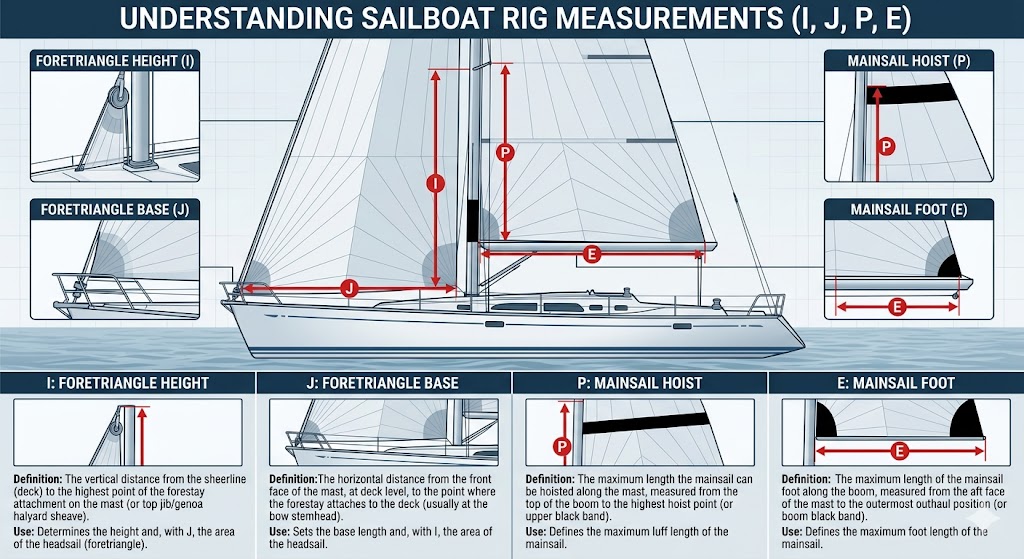
Rig Dimensions
I (Foretriangle Height) 36.0
J (Foretriangle Base) 9.9
P (Mainsail Luff) 31.5
E (Mainsail Foot) 13.5
SA Fore 178.2
SA Main 212.63
Find a Triton Aeromarine For Sale