Back to Search
Tanzer 26
Designer: Johann Tanzer  ·  Builder: Tanzer Industries Ltd. (Can)  ·  First built: 1974
+ Add to Compare
Videos
Tanzer 26
Photo: Ahunt / CC0
About the Tanzer 26

Canadian designer Johann Tanzer created this popular 26-footer as an affordable entry into serious sailing, and nearly 1,000 hulls were produced during its eleven-year production run from 1974 to 1985. Built by Tanzer Industries in fiberglass, this masthead sloop established itself as a versatile performer equally suited to weekend coastal cruising and competitive club racing. The design features a moderate fin keel with transom-hung rudder configuration that provides responsive handling while maintaining stability. With a displacement of 4,350 pounds and substantial ballast ratio, the Tanzer 26 offers reassuring stability for newer sailors without sacrificing performance. The 282 square feet of sail area generates solid light-air performance, while the boat's modest beam keeps it easily trailerable. Notable for its well-balanced helm and forgiving sailing characteristics, the Tanzer 26 became particularly popular in the Great Lakes region and throughout Canada. The design strikes an appealing balance between cruising comfort and racing capability, making it an excellent choice for sailors seeking their first "real" sailboat or those wanting a manageable weekender. Its enduring popularity in the used boat market speaks to the design's fundamental soundness and versatility.

Core Dimensions
LOA (Length Overall) 26.33 ft / 8.03 m
LWL (Waterline Length) 22.50 ft / 6.86 m
Beam 8.67 ft / 2.64 m
Max Draft 3.83 ft / 1.17 m
Displacement 4,350.00 lb / 1,973 kg
Ballast 1,950.00 lb / 885 kg
Sail Area (Reported) 282.00 ft² / 26.20 m²
Design & Construction
Hull Type Fin w/transom hung rudder
Rigging Type Masthead Sloop
Construction FG
Designer Johann Tanzer
Builder Tanzer Industries Ltd. (CAN)
First Built 1974
Last Built 1985
Number Built 960
Associations Tanzer 26
Owner Reviews

No owner reviews yet — be the first to share your experience with this boat.

Known Issues & What to Watch For
Medium Hull/Deck
The deck-to-hull joint on early Tanzer 26s uses an outward-turned flange bolted and bedded with sealant. This joint is prone to weeping leaks, particularly at the bow and stern corners where the clamping pressure was inconsistent during production. Inspect for soft spots and sealant failure along the entire toerail flange.
1974–1979 models
High Hull/Deck
The foredeck and side decks are cored with balsa on many examples. Chainplate and stanchion base fasteners frequently allow water intrusion into the balsa core, causing wet, soft, or delaminated deck areas around these fittings.
High Keel
The cast iron fin keel is attached with mild steel keel bolts that corrode significantly over time. Rust staining in the bilge sump near the keel stub is a common indicator. Keel bolt condition should be a priority survey item as replacement is costly and the bolts are not accessible without removing interior joinery.
High Keel
The keel-to-hull interface can develop stress cracking in the gelcoat and laminate around the keel sump, particularly on boats that have taken the ground or been trailered repeatedly. Inspect internally and externally for cracking or flex in this area.
High Hull/Deck
The transom-hung rudder pintles and gudgeons are mild steel on earlier builds and are prone to heavy corrosion or complete failure. Check for significant play in the rudder bearings and inspect the pintle/gudgeon hardware closely for rust and integrity.
1974–1980 models
High Rigging
Chainplate backing plates are relatively small and set into the balsa-cored deck without adequate compression sleeves on many boats. Chainplate pull-through or backing plate delamination is a known issue; inspect the interior liner and deck around each chainplate for movement or cracking.
Medium Hull/Deck
The cockpit drains are small in diameter (often 3/4 inch) and prone to blockage, resulting in a slow-draining cockpit. Some owners have upgraded to larger-diameter through-hulls; verify drain size and condition of the original fittings.
Medium Accommodations
The interior liner is a pan-style molding that traps moisture between the liner and the hull. This hidden space is difficult to inspect, promotes mold, and can conceal hull laminate issues. Musty odors below are common on boats that have not had this space ventilated or addressed.
High Engine
Many Tanzer 26s were fitted with the Volvo Penta MD5 or MD6 diesel, or the small Atomic 4 gasoline engine. The raw water cooling passages on the Volvo MD5 are known to corrode and crack the block when winterization is neglected — a common issue in Canadian-owned boats. Verify the block has never been allowed to freeze.

Own or have surveyed a Tanzer 26? Submit a known issue
Performance Ratios
PHRF Rating PHRF (Performance Handicap Racing Fleet) is a national racing handicap measured in seconds per nautical mile. Lower values indicate faster boats. Ratings are sourced from US Sailing's national database (median across 60+ regional fleets).
Under 0 — Ultralight racer0–90 — Performance racer90–150 — Cruiser/racer150–210 — Typical cruiserOver 210 — Heavy/slow cruiser
216
SA/Displacement Sail Area to Displacement ratio measures how much sail power a boat has relative to its weight. Higher values mean more performance and speed.
Under 14 — Heavy cruiser, slow14–18 — Cruising sailboat18–22 — Cruiser/racerOver 22 — Performance racer
16.98
Ballast/Displacement Ballast to Displacement ratio shows what percentage of the boat's total weight is ballast. Higher values generally mean better initial stability and stiffer sail carrying.
30–35% — Typical cruiser35–45% — Stiff performance boatOver 45% — Racing oriented
44.83
Displacement/Length Displacement to Length ratio measures how heavy a boat is relative to its waterline length. Lower values mean a lighter, faster boat.
Under 100 — Ultralight racer100–200 — Light cruiser/racer200–300 — Moderate cruiser300–400 — Heavy cruiserOver 400 — Very heavy
170.49
Comfort Ratio Ted Brewer's Comfort Ratio predicts how comfortable a boat will feel in offshore conditions. Higher values mean a steadier, more comfortable motion in a seaway.
Under 20 — Uncomfortably rough20–30 — Acceptable coastal30–40 — Good offshore comfortOver 40 — Very comfortable offshore
16
Capsize Screening Formula The USHS Capsize Screening Formula estimates offshore capsize risk. Lower is safer — values under 2.0 are considered acceptable for offshore sailing.
Under 2.0 — Safe for offshore2.0–2.2 — Borderline offshoreOver 2.2 — Coastal use recommended
2.13
Hull Speed Hull Speed is the theoretical maximum speed of a displacement hull, calculated from waterline length. Most cruising sailboats reach this speed in moderate conditions. 6.36 kn
S# (Speed Number) The Speed Number (S#) is a quick performance index. Higher values indicate a faster, more powerful design relative to its size.
Under 3.0 — Slow cruiser3.0–5.0 — Average cruiser5.0–7.0 — Performance cruiserOver 7.0 — Racer
3.13
Pounds/Inch Immersion Pounds per Inch Immersion (PPI) tells you how much weight is needed to sink the boat one inch. Useful for calculating how additional gear and stores affect waterline. 697.02 pounds/inch
SA/Displacement (Calc) Calculated Sail Area to Displacement ratio using actual measured sail dimensions rather than reported values. More precise than the reported SA/Disp figure. 17.4
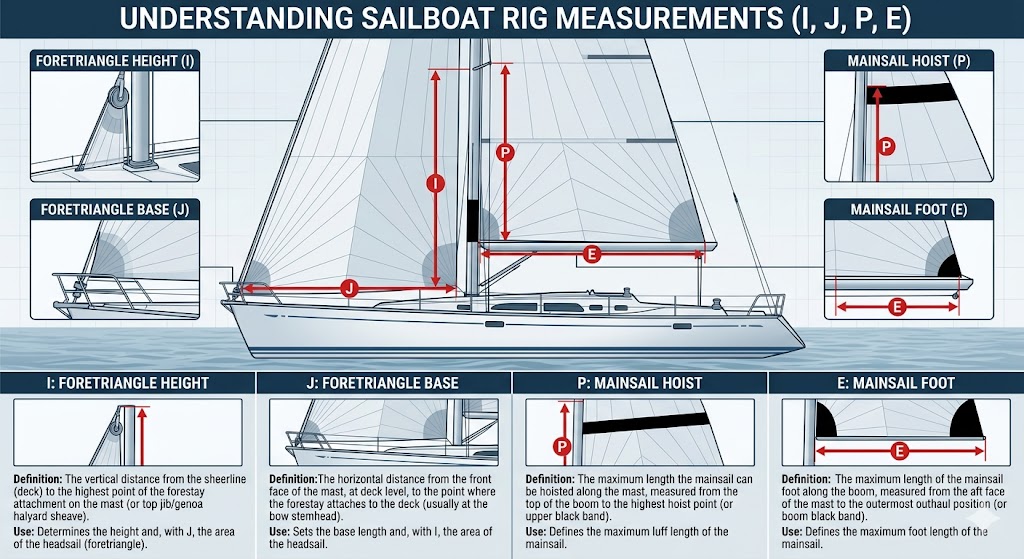
Rig Dimensions
I (Foretriangle Height) 30.15 ft / 9.19 m
J (Foretriangle Base) 10.58 ft / 3.22 m
P (Mainsail Luff) 25.25 ft / 7.70 m
E (Mainsail Foot) 10.25 ft / 3.12 m
SA Fore 159.49 ft² / 14.82 m²
SA Main 129.41 ft² / 12.02 m²
SA Total (100%) 288.90 ft² / 26.84 m²
Est. Forestay Length 31.95 ft / 9.74 m
Mast Height (DWL) 33.00 ft / 10.06 m
How It Compares

vs. Columbia 26, First 26 Beneteau, Ranger 26 Mull

This boat Similar boats
Dimensions
LOA
Tanzer 26 ★
26.3 ft
Columbia 26
26.3 ft
First 26 Beneteau
26.3 ft
Ranger 26 Mull
26.3 ft
LWL
Tanzer 26 ★
22.5 ft
Columbia 26
19.0 ft
First 26 Beneteau
22.9 ft
Ranger 26 Mull
21.8 ft
Beam
Tanzer 26 ★
8.7 ft
Columbia 26
8.0 ft
First 26 Beneteau
9.2 ft
Ranger 26 Mull
8.7 ft
Displacement
Tanzer 26 ★
4 lbs
Columbia 26
5 lbs
First 26 Beneteau
4 lbs
Ranger 26 Mull
5 lbs
Ballast
Tanzer 26 ★
1 lbs
Columbia 26
2 lbs
First 26 Beneteau
1 lbs
Ranger 26 Mull
2 lbs
Sail Area
Tanzer 26 ★
282 sq ft
Columbia 26
301 sq ft
First 26 Beneteau
291 sq ft
Ranger 26 Mull
322 sq ft
Performance
PHRF Rating (lower = faster)
Tanzer 26 ★
216 s/nm
Columbia 26
228 s/nm
First 26 Beneteau
Ranger 26 Mull
SA / Displacement (higher = more powerful)
Tanzer 26 ★
17.0
Columbia 26
16.1
First 26 Beneteau
16.4
Ranger 26 Mull
15.9
Ballast / Disp (higher = stiffer)
Tanzer 26 ★
44.8 %
Columbia 26
44.2 %
First 26 Beneteau
30.2 %
Ranger 26 Mull
Comfort Ratio (higher = more comfortable offshore)
Tanzer 26 ★
16.0
Columbia 26
23.8
First 26 Beneteau
16.2
Ranger 26 Mull
22.1
Capsize Screening (lower = safer)
Tanzer 26 ★
2.13
Columbia 26
1.85
First 26 Beneteau
2.18
Ranger 26 Mull
1.93
Displacement / Length (lower = lighter)
Tanzer 26 ★
170
Columbia 26
338
First 26 Beneteau
178
Ranger 26 Mull
Hull Speed
Tanzer 26 ★
6.4 kts
Columbia 26
5.8 kts
First 26 Beneteau
6.4 kts
Ranger 26 Mull
6.3 kts
Speed Number (higher = faster)
Tanzer 26 ★
3.1
Columbia 26
1.4
First 26 Beneteau
2.9
Ranger 26 Mull
2.0
Find a Tanzer 26 For Sale