Back to Search
Penguin
Designer: Philip Rhodes  ·  Builder: Customflex (Usa)  ·  First built: 1939
+ Add to Compare
About the Penguin

Designed as a simple, affordable one-design dinghy, the Penguin has long served as an accessible entry point into the world of sailing. Originally developed in the 1930s by Philip Rhodes, this compact flat-bottomed skiff was conceived with beginner and youth sailors in mind, offering a forgiving and easy-to-handle platform for learning fundamental sailing skills. The Penguin's straightforward construction made it popular for home building, and many early examples were built from kits or plans by enthusiastic amateurs — a tradition that gave the class a loyal grassroots following. Its shallow, flat hull is well suited to protected waters such as lakes, ponds, and calm coastal inlets, making it a natural fit for sailing clubs and youth programs. Racing within the one-design class has historically been competitive and spirited, rewarding skipper skill over equipment advantage. While the Penguin is not intended for offshore or bluewater sailing, it remains a charming and capable little boat for those looking to develop their sailing fundamentals or enjoy relaxed racing in sheltered conditions. Its modest demands and rich history make it worth a closer look.

Core Dimensions
LOA (Length Overall) 11.42 ft / 3.48 m
Beam 4.67 ft / 1.42 m
Max Draft 3.83 ft / 1.17 m
Displacement 140.00 lb / 64 kg
Design & Construction
Hull Type Centerboard Dinghy
Rigging Type Cat (Marconi)
Construction Wood or FG
Designer Philip Rhodes
Builder Customflex (USA)
First Built 1939
Number Built 10000
Owner Reviews

No owner reviews yet — be the first to share your experience with this boat.

Known Issues & What to Watch For

No known issues documented for this model yet.

Own or have surveyed a Penguin? Submit a known issue
Performance Ratios
Displacement/Length Displacement to Length ratio measures how heavy a boat is relative to its waterline length. Lower values mean a lighter, faster boat.
Under 100 — Ultralight racer100–200 — Light cruiser/racer200–300 — Moderate cruiser300–400 — Heavy cruiserOver 400 — Very heavy
68.33
Comfort Ratio Ted Brewer's Comfort Ratio predicts how comfortable a boat will feel in offshore conditions. Higher values mean a steadier, more comfortable motion in a seaway.
Under 20 — Uncomfortably rough20–30 — Acceptable coastal30–40 — Good offshore comfortOver 40 — Very comfortable offshore
2.7
Hull Speed Hull Speed is the theoretical maximum speed of a displacement hull, calculated from waterline length. Most cruising sailboats reach this speed in moderate conditions. 4.17 kn
Pounds/Inch Immersion Pounds per Inch Immersion (PPI) tells you how much weight is needed to sink the boat one inch. Useful for calculating how additional gear and stores affect waterline. 0.97 pounds/inch
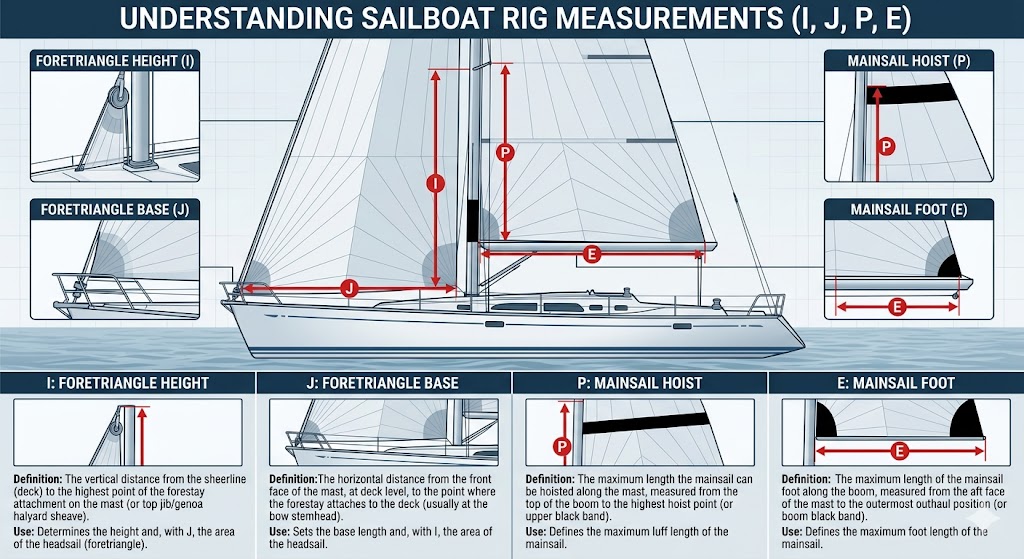
Rig Dimensions
I (Foretriangle Height) 0.33 ft / 0.10 m
P (Mainsail Luff) 75.00 ft² / 6.97 m²
E (Mainsail Foot) 8.67 ft / 2.64 m
How It Compares

vs. Beverly Dinghy, Heron, Weasel

This boat Similar boats
Dimensions
LOA
Penguin ★
11.4 ft
Beverly Dinghy
11.5 ft
Heron
11.3 ft
Weasel
11.3 ft
Beam
Penguin ★
4.7 ft
Beverly Dinghy
4.5 ft
Heron
4.5 ft
Weasel
5.5 ft
Displacement
Penguin ★
140 lbs
Beverly Dinghy
207 lbs
Heron
140 lbs
Weasel
160 lbs
Sail Area
Penguin ★
Beverly Dinghy
66 sq ft
Heron
70 sq ft
Weasel
Performance
Comfort Ratio (higher = more comfortable offshore)
Penguin ★
2.7
Beverly Dinghy
4.2
Heron
2.9
Weasel
Displacement / Length (lower = lighter)
Penguin ★
68
Beverly Dinghy
98
Heron
71
Weasel
71
Hull Speed
Penguin ★
4.2 kts
Beverly Dinghy
4.2 kts
Heron
4.1 kts
Weasel
Find a Penguin For Sale