Back to Search
Pearson 36 2
Designer: William Shaw  ·  Builder: Pearson Yachts (Usa)  ·  First built: 1985
+ Add to Compare
About the Pearson 36 2

Following in the wake of Pearson Yachts' successful fiberglass sailing yacht lineage, this 36-footer represents the company's continued evolution in mid-size cruising sailboat design. Built during an era when Pearson had established itself as a respected name in production sailing yachts, the model carries forward the builder's reputation for solid construction and practical layouts. The design emphasizes comfortable coastal cruising while maintaining respectable sailing characteristics. Her moderate proportions suggest a balanced approach between performance and livability, making her well-suited for weekend getaways and extended coastal passages alike. The cockpit arrangement and deck layout reflect Pearson's understanding of both single-handed sailing capabilities and crew comfort. Like many Pearson designs from this period, the boat benefits from robust fiberglass construction techniques that have proven their durability over decades. The interior layout typically maximizes the available space while maintaining the structural integrity that Pearson owners have come to expect. Her size places her in the sweet spot for sailors seeking a boat large enough for serious cruising yet manageable enough for a small crew to handle confidently in various conditions.

Core Dimensions
LOA (Length Overall) 36.50 ft / 11.13 m
LWL (Waterline Length) 29.58 ft / 9.02 m
Beam 12.33 ft / 3.76 m
Max Draft 6.50 ft / 1.98 m
Displacement 15,000.00 lb / 6,804 kg
Ballast 5,800.00 lb / 2,631 kg
Ballast Type Lead
Design & Construction
Hull Type Fin w/spade rudder
Rigging Type Masthead Sloop
Construction FG
Designer William Shaw
Builder Pearson Yachts (USA)
First Built 1985
Last Built 1990
Owner Reviews

No owner reviews yet — be the first to share your experience with this boat.
Performance Ratios
PHRF Rating PHRF (Performance Handicap Racing Fleet) is a national racing handicap measured in seconds per nautical mile. Lower values indicate faster boats. Ratings are sourced from US Sailing's national database (median across 60+ regional fleets).
Under 0 — Ultralight racer0–90 — Performance racer90–150 — Cruiser/racer150–210 — Typical cruiserOver 210 — Heavy/slow cruiser
138
Ballast/Displacement Ballast to Displacement ratio shows what percentage of the boat's total weight is ballast. Higher values generally mean better initial stability and stiffer sail carrying.
30–35% — Typical cruiser35–45% — Stiff performance boatOver 45% — Racing oriented
38.67
Displacement/Length Displacement to Length ratio measures how heavy a boat is relative to its waterline length. Lower values mean a lighter, faster boat.
Under 100 — Ultralight racer100–200 — Light cruiser/racer200–300 — Moderate cruiser300–400 — Heavy cruiserOver 400 — Very heavy
258.73
Pounds/Inch Immersion Pounds per Inch Immersion (PPI) tells you how much weight is needed to sink the boat one inch. Useful for calculating how additional gear and stores affect waterline. 7.82 pounds/inch
Rig Dimensions
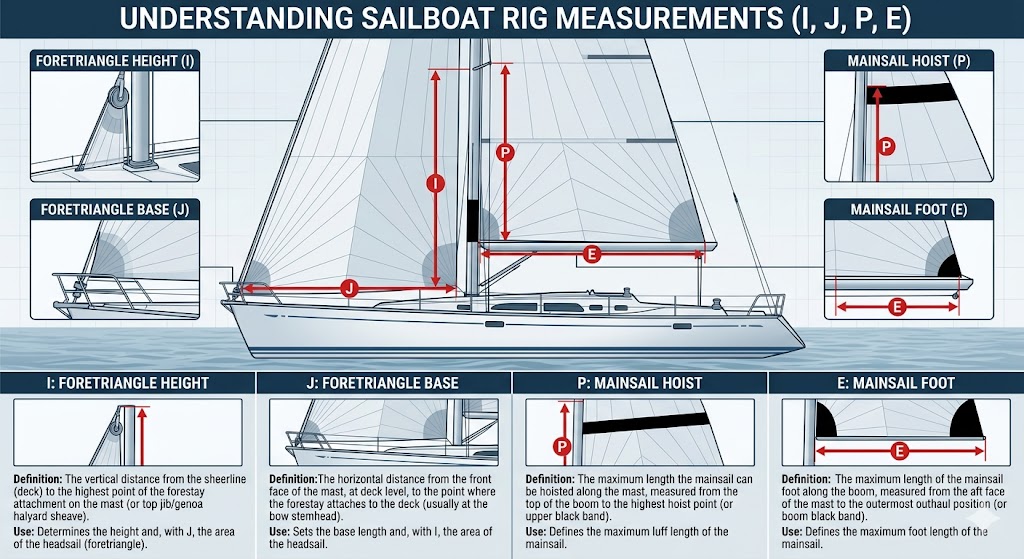
I (Foretriangle Height) 17.56
J (Foretriangle Base) 15.40 ft / 4.69 m
P (Mainsail Luff) 665.00 ft² / 61.78 m²
E (Mainsail Foot) Yanmar
Engine & Accommodations
Horsepower 30
Fuel Capacity 22 gals / 83 L
Water Capacity 100 gals / 379 L
Find a Pearson 36 2 For Sale