Back to Search
Pearson 27 Triton 27
Designer: Doug Peterson (Unauthorized)  ·  Builder: Pearson Yachts (Usa)  ·  First built: 1984
+ Add to Compare
About the Pearson 27 Triton 27

Originally launched as the Triton 28 by Carl Alberg in 1959 and later produced by Pearson Yachts as the Pearson 27, this classic design represents one of sailing's most enduring success stories. Alberg's conservative approach to yacht design created a boat that prioritizes seaworthiness and reliability over speed, making it an excellent choice for coastal cruising and learning seamanship fundamentals. The Triton's full keel configuration and moderate beam provide exceptional directional stability and forgiving handling characteristics, though at the expense of windward performance compared to modern designs. Built with solid fiberglass construction during an era when quality took precedence over cost-cutting, these boats have earned a reputation for durability that spans decades. While not particularly fast by contemporary standards, the Triton 27 excels as a comfortable coastal cruiser for couples or small families. Its traditional lines and practical interior layout make it well-suited for weekend adventures and extended coastal voyaging. The boat's forgiving nature and predictable handling have made it a popular choice for sailing schools and experienced sailors seeking a no-nonsense cruising platform with proven offshore capabilities.

Core Dimensions
LOA (Length Overall) 27.00 ft / 8.23 m
LWL (Waterline Length) 23.25 ft / 7.09 m
Beam 9.50 ft / 2.90 m
Max Draft 5.20 ft / 1.58 m
Displacement 6,250.00 lb / 2,835 kg
Ballast 2,024.00 lb / 918 kg
Design & Construction
Hull Type Fin w/spade rudder
Rigging Type Masthead Sloop
Construction FG
Designer Doug Peterson (unauthorized)
Builder Pearson Yachts (USA)
First Built 1984
Last Built 1985
Owner Reviews

No owner reviews yet — be the first to share your experience with this boat.
Performance Ratios
Ballast/Displacement Ballast to Displacement ratio shows what percentage of the boat's total weight is ballast. Higher values generally mean better initial stability and stiffer sail carrying.
30–35% — Typical cruiser35–45% — Stiff performance boatOver 45% — Racing oriented
32.38
Displacement/Length Displacement to Length ratio measures how heavy a boat is relative to its waterline length. Lower values mean a lighter, faster boat.
Under 100 — Ultralight racer100–200 — Light cruiser/racer200–300 — Moderate cruiser300–400 — Heavy cruiserOver 400 — Very heavy
222.01
Pounds/Inch Immersion Pounds per Inch Immersion (PPI) tells you how much weight is needed to sink the boat one inch. Useful for calculating how additional gear and stores affect waterline. 4.73 pounds/inch
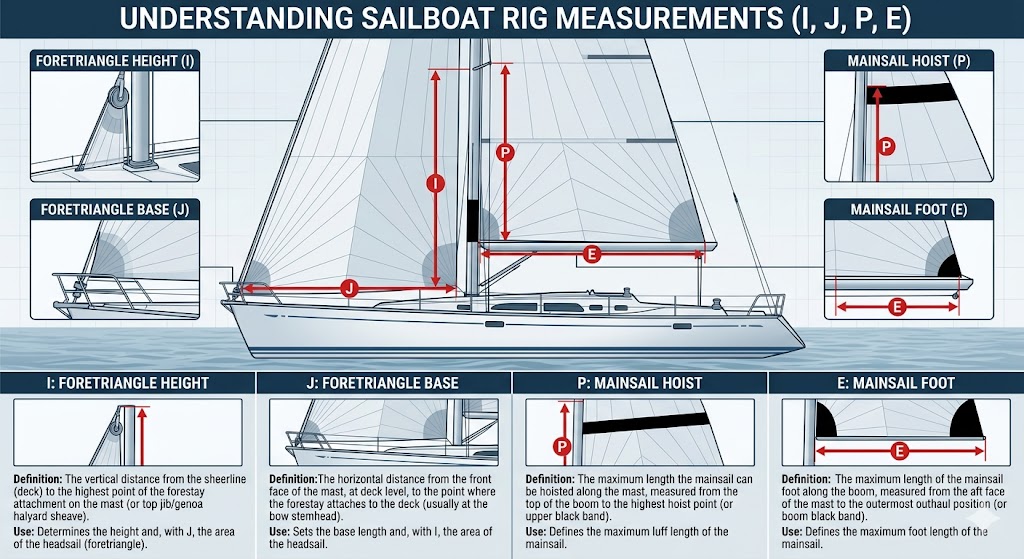
Rig Dimensions
I (Foretriangle Height) 14.85
J (Foretriangle Base) 10.80 ft / 3.29 m
P (Mainsail Luff) 314.00 ft² / 29.17 m²
E (Mainsail Foot) 222.01
Find a Pearson 27 Triton 27 For Sale