Back to Search
Orion 50
Designer: Gary Mull  ·  Builder: Ta Shing Yacht Building  ·  First built: 1983
+ Add to Compare
About the Orion 50

Designed for serious bluewater passagemaking, the Orion 50 sits comfortably in the category of capable offshore cruising sailboats built to handle extended voyages well beyond coastal waters. With a hull length that places it in the mid-range of bluewater cruisers, this vessel offers the kind of space and stability that long-distance sailors look for when planning ocean passages or extended liveaboard arrangements. While detailed specifications for the Orion 50 remain limited in available records, boats of this size and designation are typically engineered with seakeeping performance as a priority, balancing comfortable interior volume with a hull form that handles open-ocean conditions with confidence. Prospective buyers researching this model would do well to seek out original builder documentation or connect with current owners to uncover specifics around displacement, sail area, and keel configuration. For sailors drawn to blue-water adventure — whether circumnavigation, offshore rallies, or extended coastal cruising — the Orion 50 warrants closer investigation. Reaching out to brokers familiar with this model or consulting dedicated sailing forums may help fill in the gaps and give a fuller picture of what this boat truly offers.

Core Dimensions
LOA (Length Overall) 49.50 ft / 15.09 m
LWL (Waterline Length) 42.50 ft / 12.95 m
Beam 14.50 ft / 4.42 m
Max Draft 6.50 ft / 1.98 m
Displacement 36,600.00 lb / 16,601 kg
Ballast 14,000.00 lb / 6,350 kg
Sail Area (Reported) 1,118.00 ft² / 103.87 m²
Design & Construction
Hull Type Fin with rudder on skeg
Rigging Type Staysail Ketch
Construction FG
Designer Gary Mull
Builder Ta Shing Yacht Building
First Built 1983
Last Built 1987
Owner Reviews

No owner reviews yet — be the first to share your experience with this boat.

Known Issues & What to Watch For

No known issues documented for this model yet.

Own or have surveyed a Orion 50? Submit a known issue
Performance Ratios
PHRF Rating PHRF (Performance Handicap Racing Fleet) is a national racing handicap measured in seconds per nautical mile. Lower values indicate faster boats. Ratings are sourced from US Sailing's national database (median across 60+ regional fleets).
Under 0 — Ultralight racer0–90 — Performance racer90–150 — Cruiser/racer150–210 — Typical cruiserOver 210 — Heavy/slow cruiser
110
SA/Displacement Sail Area to Displacement ratio measures how much sail power a boat has relative to its weight. Higher values mean more performance and speed.
Under 14 — Heavy cruiser, slow14–18 — Cruising sailboat18–22 — Cruiser/racerOver 22 — Performance racer
16.3
Comfort Ratio Ted Brewer's Comfort Ratio predicts how comfortable a boat will feel in offshore conditions. Higher values mean a steadier, more comfortable motion in a seaway.
Under 20 — Uncomfortably rough20–30 — Acceptable coastal30–40 — Good offshore comfortOver 40 — Very comfortable offshore
36.03
Capsize Screening Formula The USHS Capsize Screening Formula estimates offshore capsize risk. Lower is safer — values under 2.0 are considered acceptable for offshore sailing.
Under 2.0 — Safe for offshore2.0–2.2 — Borderline offshoreOver 2.2 — Coastal use recommended
1.75
Hull Speed Hull Speed is the theoretical maximum speed of a displacement hull, calculated from waterline length. Most cruising sailboats reach this speed in moderate conditions. 8.74
S# (Speed Number) The Speed Number (S#) is a quick performance index. Higher values indicate a faster, more powerful design relative to its size.
Under 3.0 — Slow cruiser3.0–5.0 — Average cruiser5.0–7.0 — Performance cruiserOver 7.0 — Racer
2.16
Pounds/Inch Immersion Pounds per Inch Immersion (PPI) tells you how much weight is needed to sink the boat one inch. Useful for calculating how additional gear and stores affect waterline. 2.0
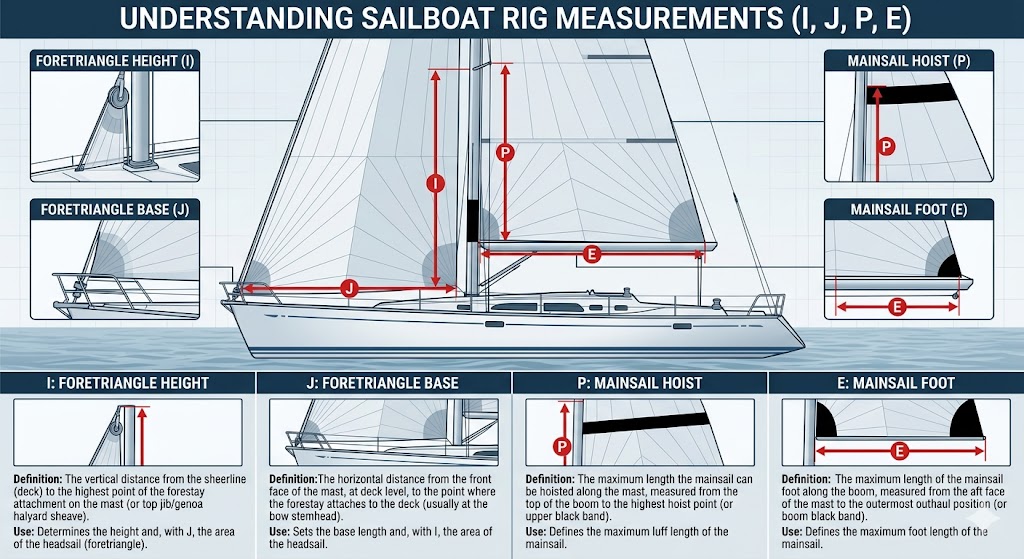
Rig Dimensions
I (Foretriangle Height) 58.5
J (Foretriangle Base) 18.54
P (Mainsail Luff) 52.0
E (Mainsail Foot) 15.33
SA Fore 542.3
SA Main 398.58
How It Compares

vs. Gulfstar 50 Sailmaster, Stevens 50, Taswell 49

This boat Similar boats
Dimensions
LOA
Orion 50 ★
49.5 ft
Gulfstar 50 Sailmaster
50.0 ft
Stevens 50
50.0 ft
Taswell 49
48.8 ft
LWL
Orion 50 ★
42.5 ft
Gulfstar 50 Sailmaster
41.0 ft
Stevens 50
37.8 ft
Taswell 49
41.9 ft
Beam
Orion 50 ★
14.5 ft
Gulfstar 50 Sailmaster
14.5 ft
Stevens 50
14.3 ft
Taswell 49
15.0 ft
Displacement
Orion 50 ★
36 lbs
Gulfstar 50 Sailmaster
41 lbs
Stevens 50
31 lbs
Taswell 49
32 lbs
Ballast
Orion 50 ★
14 lbs
Gulfstar 50 Sailmaster
11 lbs
Stevens 50
12 lbs
Taswell 49
13 lbs
Sail Area
Orion 50 ★
1 sq ft
Gulfstar 50 Sailmaster
1 sq ft
Stevens 50
1 sq ft
Taswell 49
Performance
PHRF Rating (lower = faster)
Orion 50 ★
110 s/nm
Gulfstar 50 Sailmaster
123 s/nm
Stevens 50
Taswell 49
102 s/nm
SA / Displacement (higher = more powerful)
Orion 50 ★
16.3
Gulfstar 50 Sailmaster
13.6
Stevens 50
18.7
Taswell 49
Ballast / Disp (higher = stiffer)
Orion 50 ★
Gulfstar 50 Sailmaster
Stevens 50
38.5 %
Taswell 49
40.0 %
Comfort Ratio (higher = more comfortable offshore)
Orion 50 ★
36.0
Gulfstar 50 Sailmaster
41.2
Stevens 50
33.6
Taswell 49
Capsize Screening (lower = safer)
Orion 50 ★
1.75
Gulfstar 50 Sailmaster
1.69
Stevens 50
1.82
Taswell 49
Displacement / Length (lower = lighter)
Orion 50 ★
Gulfstar 50 Sailmaster
Stevens 50
258
Taswell 49
196
Hull Speed
Orion 50 ★
8.7 kts
Gulfstar 50 Sailmaster
8.6 kts
Stevens 50
8.2 kts
Taswell 49
Speed Number (higher = faster)
Orion 50 ★
2.2
Gulfstar 50 Sailmaster
1.7
Stevens 50
Taswell 49
Find a Orion 50 For Sale