Back to Search
Nordic Folkboat
Designer: Jac Iversen & Tor Sunden/Scandinavian Yacht Racing  ·  First built: 1942
+ Add to Compare
Videos
About the Nordic Folkboat

Born from a 1942 Scandinavian design competition, this classic represents one of sailing's most enduring and beloved small boats. Designed by Jac Iversen and Tor Sunden under the auspices of Scandinavian Yacht Racing, the Nordic Folkboat was conceived as an affordable yet seaworthy vessel that could serve both racing and cruising roles for the everyman sailor. At 25 feet overall with a traditional long keel and transom-hung rudder, this design embodies timeless sailing virtues. The substantial displacement of 4,255 pounds and generous ballast ratio create exceptional stability and sea-kindly motion, while the fractional sloop rig provides balanced sail handling. With over 4,000 hulls built since inception, the Folkboat has proven its worth across decades of varied sailing conditions. Originally constructed in wood, modern versions also utilize fiberglass while maintaining the classic proportions. The boat excels in coastal cruising and club racing, offering genuine offshore capability despite its modest size. The comfortable cockpit and practical interior accommodate weekend adventures, while the boat's forgiving nature makes it ideal for learning traditional sailing skills. This design's enduring popularity stems from its perfect balance of performance, seaworthiness, and accessibility.

Core Dimensions
LOA (Length Overall) 25.20 ft / 7.68 m
LWL (Waterline Length) 19.68 ft / 6.00 m
Beam 7.22 ft / 2.20 m
Max Draft 3.92 ft / 1.19 m
Displacement 4,255.00 lb / 1,930 kg
Ballast 2,205.00 lb / 1,000 kg
Ballast Type Iron
Sail Area (Reported) 220.00 ft² / 20.44 m²
Design & Construction
Hull Type Long keel w/trans. hung rudder
Rigging Type Fractional Sloop
Construction Wood/FG
Designer Jac Iversen & Tor Sunden/Scandinavian Yacht Racing
First Built 1942
Number Built 4000
Associations Nordic Folkboat - Australia
Owner Reviews

No owner reviews yet — be the first to share your experience with this boat.

Known Issues & What to Watch For
High Hull/Deck
Original wooden Folkboats are prone to seam opening and caulking failure, particularly at the garboards near the keel. Graving pieces and short-grained areas in lapstrake or carvel planking near the stem and transom are high-risk zones for rot and structural degradation.
Medium Hull/Deck
GRP Folkboats built by various licensed builders (e.g. Borjesson, Ostergotlands) vary significantly in layup quality and thickness, as construction was licensed to many small yards with inconsistent standards. Buyers should verify which builder produced the specific hull, as some early GRP versions have thin, under-reinforced topsides.
High Hull/Deck
On wooden boats, the area around the chainplates and shroud attachment points is a well-documented rot zone due to water tracking down the standing rigging into the deck and deck beam structure. Soft decks or springy feel near shroud bases is a serious red flag.
High Keel
The external iron ballast keel on wooden Folkboats is bolted through the wooden keel timber, and the interface between the iron keel and wood is a chronic source of rot, fastener corrosion, and weeping. The keel bolts (typically iron) corrode and can become structurally compromised while appearing intact externally.
High Hull/Deck
On wooden examples, the centerline backbone — including stem, keel timber, and sternpost — is subject to long-term checking, delamination of laminated members, and rot at scarph joints. These joints are difficult to inspect without removing interior joinery.
High Hull/Deck
Conversion boats where a wooden hull has been sheathed in GRP cloth and epoxy or polyester present a particular risk: moisture trapped between the glass and wood skin is invisible and accelerates rot. Tap-testing and moisture metering of sheathed wooden hulls is critical.
Low Accommodations
The Folkboat's interior is extremely spartan and minimal by design, with limited headroom (approximately 4 ft) and basic fitout. Many boats have had amateur modifications to berths, the companionway, and the ballast arrangement that may affect stability or structural integrity.
High Rigging
The original Folkboat rig uses chain plates bolted directly to wooden frames or shelves. On wooden boats, these frames are a known rot point where water has tracked for decades. Check for any movement or play in the chainplates under rig tension, and inspect the backing structure from below.
Medium Hull/Deck
The transom-hung rudder on wooden Folkboats is subject to pintles and gudgeons pulling out or corroding, particularly where they are bolted through the transom planking. The rudder itself, if wooden, commonly delaminates or checks, allowing water ingress and eventual rotting of the core.

Own or have surveyed a Nordic Folkboat? Submit a known issue
Performance Ratios
SA/Displacement Sail Area to Displacement ratio measures how much sail power a boat has relative to its weight. Higher values mean more performance and speed.
Under 14 — Heavy cruiser, slow14–18 — Cruising sailboat18–22 — Cruiser/racerOver 22 — Performance racer
13.44
Ballast/Displacement Ballast to Displacement ratio shows what percentage of the boat's total weight is ballast. Higher values generally mean better initial stability and stiffer sail carrying.
30–35% — Typical cruiser35–45% — Stiff performance boatOver 45% — Racing oriented
51.82
Displacement/Length Displacement to Length ratio measures how heavy a boat is relative to its waterline length. Lower values mean a lighter, faster boat.
Under 100 — Ultralight racer100–200 — Light cruiser/racer200–300 — Moderate cruiser300–400 — Heavy cruiserOver 400 — Very heavy
249.22
Comfort Ratio Ted Brewer's Comfort Ratio predicts how comfortable a boat will feel in offshore conditions. Higher values mean a steadier, more comfortable motion in a seaway.
Under 20 — Uncomfortably rough20–30 — Acceptable coastal30–40 — Good offshore comfortOver 40 — Very comfortable offshore
22.13
Capsize Screening Formula The USHS Capsize Screening Formula estimates offshore capsize risk. Lower is safer — values under 2.0 are considered acceptable for offshore sailing.
Under 2.0 — Safe for offshore2.0–2.2 — Borderline offshoreOver 2.2 — Coastal use recommended
1.78
Hull Speed Hull Speed is the theoretical maximum speed of a displacement hull, calculated from waterline length. Most cruising sailboats reach this speed in moderate conditions. 5.94 kn
S# (Speed Number) The Speed Number (S#) is a quick performance index. Higher values indicate a faster, more powerful design relative to its size.
Under 3.0 — Slow cruiser3.0–5.0 — Average cruiser5.0–7.0 — Performance cruiserOver 7.0 — Racer
1.82
Pounds/Inch Immersion Pounds per Inch Immersion (PPI) tells you how much weight is needed to sink the boat one inch. Useful for calculating how additional gear and stores affect waterline. 507.70 pounds/inch
SA/Displacement (Calc) Calculated Sail Area to Displacement ratio using actual measured sail dimensions rather than reported values. More precise than the reported SA/Disp figure. 13.44
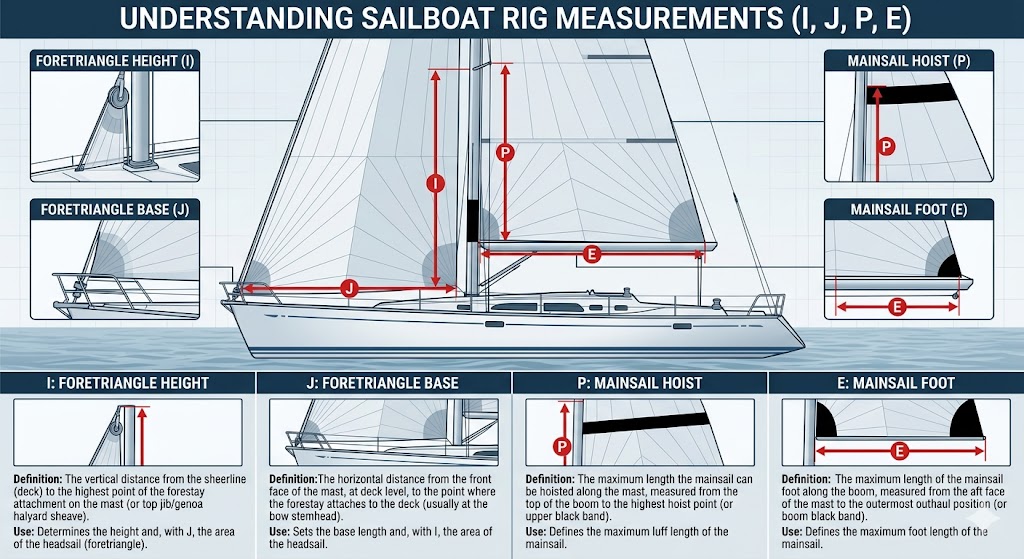
Rig Dimensions
I (Foretriangle Height) 18.04 ft / 5.50 m
J (Foretriangle Base) 6.72 ft / 2.05 m
P (Mainsail Luff) 28.71 ft / 8.75 m
E (Mainsail Foot) 11.10 ft / 3.38 m
SA Fore 60.61 ft² / 5.63 m²
SA Main 159.34 ft² / 14.80 m²
SA Total (100%) 219.95 ft² / 20.43 m²
Est. Forestay Length 19.25 ft / 5.87 m
How It Compares

vs. Contessa 25 Peterson, Folksong, Westerly 25

This boat Similar boats
Dimensions
LOA
Nordic Folkboat ★
25.2 ft
Contessa 25 Peterson
25.2 ft
Folksong
25.2 ft
Westerly 25
25.1 ft
LWL
Nordic Folkboat ★
19.7 ft
Contessa 25 Peterson
21.0 ft
Folksong
19.7 ft
Westerly 25
21.0 ft
Beam
Nordic Folkboat ★
7.2 ft
Contessa 25 Peterson
9.4 ft
Folksong
7.3 ft
Westerly 25
7.4 ft
Displacement
Nordic Folkboat ★
4 lbs
Contessa 25 Peterson
4 lbs
Folksong
5 lbs
Westerly 25
4 lbs
Ballast
Nordic Folkboat ★
2 lbs
Contessa 25 Peterson
2 lbs
Folksong
1 lbs
Westerly 25
1 lbs
Sail Area
Nordic Folkboat ★
220 sq ft
Contessa 25 Peterson
350 sq ft
Folksong
280 sq ft
Westerly 25
275 sq ft
Performance
SA / Displacement (higher = more powerful)
Nordic Folkboat ★
13.4
Contessa 25 Peterson
20.3
Folksong
14.3
Westerly 25
17.5
Ballast / Disp (higher = stiffer)
Nordic Folkboat ★
51.8 %
Contessa 25 Peterson
45.7 %
Folksong
Westerly 25
Comfort Ratio (higher = more comfortable offshore)
Nordic Folkboat ★
22.1
Contessa 25 Peterson
16.1
Folksong
29.0
Westerly 25
19.3
Capsize Screening (lower = safer)
Nordic Folkboat ★
1.78
Contessa 25 Peterson
2.27
Folksong
1.64
Westerly 25
1.87
Displacement / Length (lower = lighter)
Nordic Folkboat ★
249
Contessa 25 Peterson
221
Folksong
Westerly 25
Hull Speed
Nordic Folkboat ★
5.9 kts
Contessa 25 Peterson
6.1 kts
Folksong
5.9 kts
Westerly 25
6.1 kts
Find a Nordic Folkboat For Sale