Back to Search
Island Packet 420
Designer: Robert K. Johnson  ·  Builder: Island Packet Yachts (Usa)  ·  First built: 1999
+ Add to Compare
Videos
About the Island Packet 420

Built from 1999 by the respected Island Packet Yachts of Florida, this 44-footer represents the quintessential American cruising sailboat designed by Robert K. Johnson. The IP 420 embodies the builder's philosophy of creating comfortable, seaworthy vessels prioritizing safety and livability over racing performance. With its traditional long keel configuration and substantial 30,000-pound displacement, this cutter-rigged cruiser offers exceptional directional stability and comfortable motion in seaway conditions. The generous beam of 14.25 feet provides spacious accommodations below, while the moderate 5-foot draft allows access to popular cruising destinations while maintaining good upwind ability. The boat's impressive comfort ratio of 34.12 reflects Island Packet's commitment to creating vessels that excel in offshore passagemaking and extended cruising. Combined with a conservative capsize screening formula of 1.84, these numbers indicate a boat well-suited for serious blue-water voyaging. Island Packet's reputation for quality fiberglass construction and attention to detail made these boats highly sought after among cruising sailors. The cutter rig configuration provides excellent sail handling options and storm management capabilities, making this an ideal choice for couples planning extended coastal cruising or ocean passages where comfort and safety take precedence over speed.

Core Dimensions
LOA (Length Overall) 44.58 ft / 13.59 m
LWL (Waterline Length) 37.33 ft / 11.38 m
Beam 14.25 ft / 4.34 m
Max Draft 5.00 ft / 1.52 m
Displacement 30,000.00 lb / 13,608 kg
Ballast 12,000.00 lb / 5,443 kg
Ballast Type Lead
Sail Area (Reported) 924.00 ft² / 85.84 m²
Design & Construction
Hull Type Long Keel
Rigging Type Cutter
Construction FG
Designer Robert K. Johnson
Builder Island Packet Yachts (USA)
First Built 1999
Associations Official Island Packet Yacht Owners Association
Owner Reviews

No owner reviews yet — be the first to share your experience with this boat.

Known Issues & What to Watch For
Medium Hull/Deck
Island Packet's full-length inner liner is bonded to the hull, making inspection of the hull laminate beneath the liner nearly impossible without destructive investigation. Water trapped between the liner and hull can cause hidden delamination that is difficult to detect even with moisture meters.
Medium Hull/Deck
The portlight frames on Island Packet boats of this era are prone to leaking where they are bedded into the fiberglass. Water intrusion around ports can lead to saturation of the balsa-cored deck sections adjacent to the cabin sides.
High Hull/Deck
Island Packet used balsa core extensively in the deck. Areas around deck hardware, stanchion bases, and chainplates are known to allow water ingress if original bedding compounds have failed, leading to soft spots and balsa core rot.
High Keel
The full-keel/encapsulated ballast design makes keel bolt inspection difficult. The keel-to-hull joint should be carefully inspected for cracking or weeping, which can indicate stress or keel bolt deterioration that is otherwise inaccessible.
High Rigging
Island Packet 420 chainplates are internal and glassed or covered behind interior joinery, making routine inspection nearly impossible without removing cabinetry. Corrosion can progress undetected, and the chainplate knees should be inspected for any signs of weeping or staining on the interior.
Medium Engine
The IP 420 is typically fitted with a Yanmar diesel accessed through a center cockpit engine room. While access is better than on many sailboats, the raw water impeller housing and heat exchanger are known to be awkward to service, and many owners defer maintenance longer than recommended.
Medium Electrical
Island Packet wired these boats with extensive AC and DC systems from the factory, including sophisticated charging systems. In boats that have had multiple owners, aftermarket additions to the electrical system are common and often poorly documented, creating wiring complexity and potential fire risk.
Low Accommodations
The teak and holly sole is known to develop squeaks and soft spots as the underlying substrate ages or if moisture has reached the subfloor. Sections of the sole should be pressed and walked to check for movement or delamination.

Own or have surveyed a Island Packet 420? Submit a known issue
Performance Ratios
PHRF Rating PHRF (Performance Handicap Racing Fleet) is a national racing handicap measured in seconds per nautical mile. Lower values indicate faster boats. Ratings are sourced from US Sailing's national database (median across 60+ regional fleets).
Under 0 — Ultralight racer0–90 — Performance racer90–150 — Cruiser/racer150–210 — Typical cruiserOver 210 — Heavy/slow cruiser
126
SA/Displacement Sail Area to Displacement ratio measures how much sail power a boat has relative to its weight. Higher values mean more performance and speed.
Under 14 — Heavy cruiser, slow14–18 — Cruising sailboat18–22 — Cruiser/racerOver 22 — Performance racer
15.38
Ballast/Displacement Ballast to Displacement ratio shows what percentage of the boat's total weight is ballast. Higher values generally mean better initial stability and stiffer sail carrying.
30–35% — Typical cruiser35–45% — Stiff performance boatOver 45% — Racing oriented
40
Displacement/Length Displacement to Length ratio measures how heavy a boat is relative to its waterline length. Lower values mean a lighter, faster boat.
Under 100 — Ultralight racer100–200 — Light cruiser/racer200–300 — Moderate cruiser300–400 — Heavy cruiserOver 400 — Very heavy
257.45
Comfort Ratio Ted Brewer's Comfort Ratio predicts how comfortable a boat will feel in offshore conditions. Higher values mean a steadier, more comfortable motion in a seaway.
Under 20 — Uncomfortably rough20–30 — Acceptable coastal30–40 — Good offshore comfortOver 40 — Very comfortable offshore
34.12
Capsize Screening Formula The USHS Capsize Screening Formula estimates offshore capsize risk. Lower is safer — values under 2.0 are considered acceptable for offshore sailing.
Under 2.0 — Safe for offshore2.0–2.2 — Borderline offshoreOver 2.2 — Coastal use recommended
1.84
Hull Speed Hull Speed is the theoretical maximum speed of a displacement hull, calculated from waterline length. Most cruising sailboats reach this speed in moderate conditions. 8.19 kn
S# (Speed Number) The Speed Number (S#) is a quick performance index. Higher values indicate a faster, more powerful design relative to its size.
Under 3.0 — Slow cruiser3.0–5.0 — Average cruiser5.0–7.0 — Performance cruiserOver 7.0 — Racer
1.95
Pounds/Inch Immersion Pounds per Inch Immersion (PPI) tells you how much weight is needed to sink the boat one inch. Useful for calculating how additional gear and stores affect waterline. 1,900.72 pounds/inch
SA/Displacement (Calc) Calculated Sail Area to Displacement ratio using actual measured sail dimensions rather than reported values. More precise than the reported SA/Disp figure. 15.38
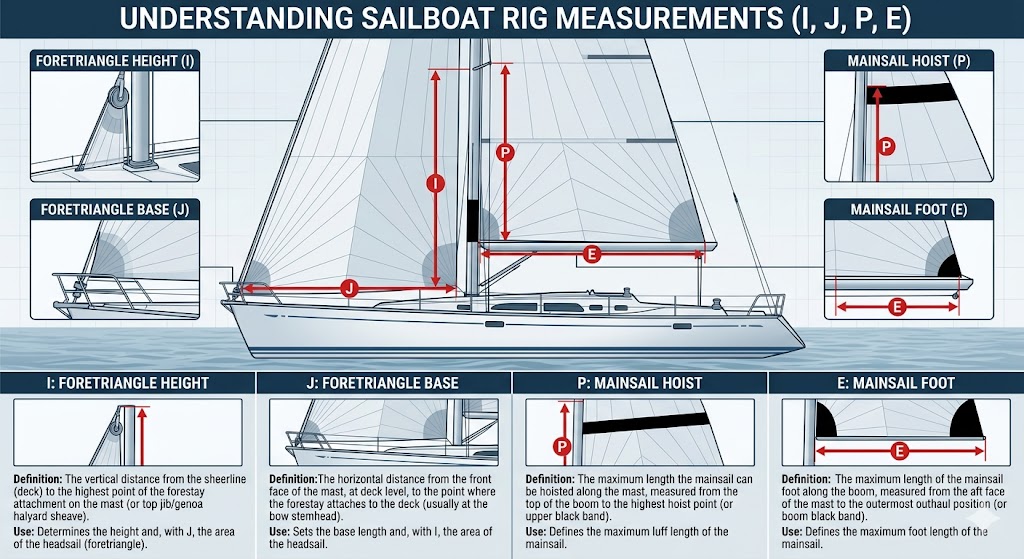
Rig Dimensions
I (Foretriangle Height) 55.00 ft / 16.76 m
J (Foretriangle Base) 18.92 ft / 5.77 m
P (Mainsail Luff) 47.50 ft / 14.48 m
E (Mainsail Foot) 17.00 ft / 5.18 m
SA Fore 520.30 ft² / 48.34 m²
SA Main 403.75 ft² / 37.51 m²
SA Total (100%) 924.05 ft² / 85.85 m²
Est. Forestay Length 58.16 ft / 17.73 m
Mast Height (DWL) 58.83 ft / 17.93 m
Engine & Accommodations
Engine Make Yanmar
Engine Type Diesel
Horsepower 75
Fuel Capacity 160 gals / 606 L
Water Capacity 250 gals / 946 L
Resources & Community
Find a Island Packet 420 For Sale