Back to Search

Formosa 41

Designer: William Garden  ·  Builder: Formosa Boat Yard Ta Chiao  ·  First built: 1972
+ Add to Compare
Videos
About the Formosa 41

Designed by renowned naval architect William Garden and built by Taiwan's Ta Chiao yard starting in 1972, this masthead ketch represents classic blue-water cruising from the golden age of fiberglass sailboat construction. Garden's design philosophy emphasized seaworthiness over speed, creating a vessel that has earned respect among serious cruisers for its ocean-crossing capabilities. The long keel configuration provides exceptional directional stability and helps the boat track straight in heavy weather, though it sacrifices some maneuverability in tight quarters. With a substantial displacement of 28,000 pounds and generous ballast ratio, this design prioritizes safety and comfort over performance, reflected in its impressive comfort ratio of 44.75. The capsize screening formula of 1.61 indicates good stability characteristics suitable for offshore passage making. The ketch rig offers excellent sail handling options, allowing crews to reduce sail area incrementally in deteriorating conditions while maintaining balance. Garden's hull lines favor seakindliness over speed, with a conservative sail area to displacement ratio that ensures manageable sailing in various conditions. This design appeals to cruisers seeking a proven offshore platform rather than racing performance, with many examples having completed extensive voyages including circumnavigations.

Core Dimensions
LOA (Length Overall) 40.92 ft / 12.47 m
LWL (Waterline Length) 32.00 ft / 9.75 m
Beam 12.17 ft / 3.71 m
Max Draft 6.16 ft / 1.88 m
Displacement 28,000.00 lb / 12,701 kg
Ballast 9,200.00 lb / 4,173 kg
Ballast Type Iron
Sail Area (Reported) 780.00 ft² / 72.46 m²
Design & Construction
Hull Type Long Keel
Rigging Type Masthead Ketch
Construction FG
Designer William Garden
Builder Formosa Boat Yard Ta Chiao
First Built 1972
Owner Reviews

No owner reviews yet — be the first to share your experience with this boat.

Known Issues & What to Watch For
High Hull/Deck
Taiwanese-built Formosa hulls of this era commonly used a wet lay-up process with inconsistent resin-to-glass ratios, resulting in areas of resin-rich laminate that are prone to delamination, particularly in the topsides and deck areas. Core samples or moisture meter readings across the entire deck surface are essential.
1972–1980 models
High Hull/Deck
Teak-planked decks over fiberglass substrate were common on this model. The teak is typically fastened with hundreds of small screws through the FG deck, and when the teak seams open or the wood shrinks, water intrudes through fastener holes leading to widespread deck core saturation and delamination of the underlying fiberglass.
High Hull/Deck
The chainplate attachment areas are known to allow water intrusion where chainplates pass through the deck. The original bedding compound deteriorates and is rarely resealed, leading to rot in the wooden backing blocks beneath the deck and potential compromise of shroud load transfer.
High Hull/Deck
Bulkhead-to-hull tabbing on Ta Chiao-built boats of this period was often done with minimal glass cloth and inconsistent adhesion. Bulkheads may have pulled away from the hull, especially in the forward cabin area, reducing structural integrity and requiring re-tabbing.
High Keel
The long keel is encapsulated but the keel-to-hull joint can develop weeping cracks, particularly at the garboard seam. These are sometimes faired over cosmetically without addressing underlying movement. Probe this joint carefully for softness or flex.
Medium Accommodations
Interior joinery was built from teak and Philippine mahogany with minimal sealing of end grain. Decades of bilge moisture and condensation have typically caused significant rot in sole boards, cabin sole framing, and lower portions of interior cabinetry.
Medium Accommodations
Holding tank and plumbing systems were either absent or rudimentary in original construction and may have been added or modified by multiple owners over the years, often with non-standard fittings and hose runs that are difficult to trace and prone to odor and leakage.
High Electrical
Original wiring was typically undersized and lacks proper overcurrent protection by modern ABYC standards. Multiple owner modifications over 40+ years often result in a layered, non-documented wiring system with mixed wire gauges, improper connectors, and significant fire risk.
High Engine
Engine beds on these boats are wooden and glassed in place. They frequently show rot and delamination from bilge water exposure, causing the engine to shift alignment over time. Inspect engine bed integrity closely, as re-bedding is a major undertaking.
High Rigging
Chainplates are typically mild steel or bronze and are glassed or bolted into wooden backing structures inside the hull. Internal corrosion and wood rot in the backing structure is common and often invisible without opening the interior liner or cabinetry.
High Rigging
The original bronze or galvanized standing rigging hardware from the 1970s is almost certainly at end of life. Stem fittings and tang attachments at the mast show cracking and fatigue that is difficult to detect visually, particularly on boats that have not had recent rigging surveys.
unrestored examples

Own or have surveyed a Formosa 41? Submit a known issue
Performance Ratios
PHRF Rating PHRF (Performance Handicap Racing Fleet) is a national racing handicap measured in seconds per nautical mile. Lower values indicate faster boats. Ratings are sourced from US Sailing's national database (median across 60+ regional fleets).
Under 0 — Ultralight racer0–90 — Performance racer90–150 — Cruiser/racer150–210 — Typical cruiserOver 210 — Heavy/slow cruiser
221
SA/Displacement Sail Area to Displacement ratio measures how much sail power a boat has relative to its weight. Higher values mean more performance and speed.
Under 14 — Heavy cruiser, slow14–18 — Cruising sailboat18–22 — Cruiser/racerOver 22 — Performance racer
13.59
Ballast/Displacement Ballast to Displacement ratio shows what percentage of the boat's total weight is ballast. Higher values generally mean better initial stability and stiffer sail carrying.
30–35% — Typical cruiser35–45% — Stiff performance boatOver 45% — Racing oriented
32.86
Displacement/Length Displacement to Length ratio measures how heavy a boat is relative to its waterline length. Lower values mean a lighter, faster boat.
Under 100 — Ultralight racer100–200 — Light cruiser/racer200–300 — Moderate cruiser300–400 — Heavy cruiserOver 400 — Very heavy
381.47
Comfort Ratio Ted Brewer's Comfort Ratio predicts how comfortable a boat will feel in offshore conditions. Higher values mean a steadier, more comfortable motion in a seaway.
Under 20 — Uncomfortably rough20–30 — Acceptable coastal30–40 — Good offshore comfortOver 40 — Very comfortable offshore
44.75
Capsize Screening Formula The USHS Capsize Screening Formula estimates offshore capsize risk. Lower is safer — values under 2.0 are considered acceptable for offshore sailing.
Under 2.0 — Safe for offshore2.0–2.2 — Borderline offshoreOver 2.2 — Coastal use recommended
1.61
Hull Speed Hull Speed is the theoretical maximum speed of a displacement hull, calculated from waterline length. Most cruising sailboats reach this speed in moderate conditions. 7.58 kn
S# (Speed Number) The Speed Number (S#) is a quick performance index. Higher values indicate a faster, more powerful design relative to its size.
Under 3.0 — Slow cruiser3.0–5.0 — Average cruiser5.0–7.0 — Performance cruiserOver 7.0 — Racer
0.91
Pounds/Inch Immersion Pounds per Inch Immersion (PPI) tells you how much weight is needed to sink the boat one inch. Useful for calculating how additional gear and stores affect waterline. 1,391.51 pounds/inch
SA/Displacement (Calc) Calculated Sail Area to Displacement ratio using actual measured sail dimensions rather than reported values. More precise than the reported SA/Disp figure. 11.81
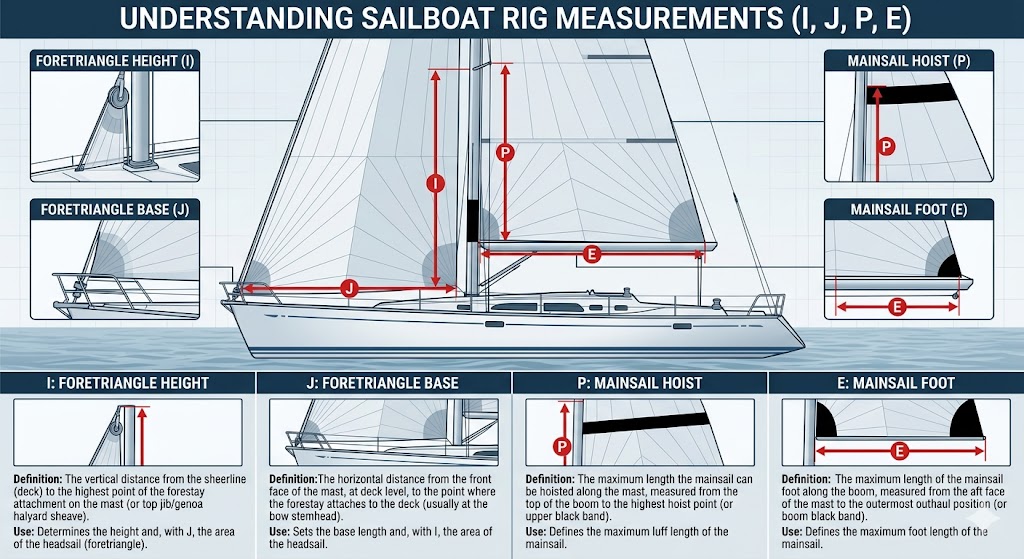
Rig Dimensions
I (Foretriangle Height) 49.00 ft / 14.94 m
J (Foretriangle Base) 14.50 ft / 4.42 m
P (Mainsail Luff) 43.00 ft / 13.11 m
E (Mainsail Foot) 15.00 ft / 4.57 m
SA Fore 355.25 ft² / 33.00 m²
SA Main 322.50 ft² / 29.96 m²
SA Total (100%) 677.75 ft² / 62.97 m²
Est. Forestay Length 51.10 ft / 15.58 m
Engine & Accommodations
Engine Make Perkins
Engine Type Diesel
Horsepower 45
Fuel Capacity 60 gals / 227 L
Water Capacity 120 gals / 454 L
How It Compares

vs. Ct 41, Dickerson 41, Gulfstar 41 Kth, Offshore 41 Cheoy Lee, Sea Tiger 41

This boat Similar boats
Dimensions
LOA
Formosa 41 ★
40.9 ft
Ct 41
41.0 ft
Dickerson 41
41.0 ft
Gulfstar 41 Kth
41.0 ft
Offshore 41 Cheoy Lee
40.9 ft
Sea Tiger 41
41.0 ft
LWL
Formosa 41 ★
32.0 ft
Ct 41
32.5 ft
Dickerson 41
31.5 ft
Gulfstar 41 Kth
33.0 ft
Offshore 41 Cheoy Lee
32.5 ft
Sea Tiger 41
35.0 ft
Beam
Formosa 41 ★
12.2 ft
Ct 41
12.1 ft
Dickerson 41
12.5 ft
Gulfstar 41 Kth
12.0 ft
Offshore 41 Cheoy Lee
12.8 ft
Sea Tiger 41
12.0 ft
Displacement
Formosa 41 ★
28 lbs
Ct 41
27 lbs
Dickerson 41
24 lbs
Gulfstar 41 Kth
22 lbs
Offshore 41 Cheoy Lee
21 lbs
Sea Tiger 41
28 lbs
Ballast
Formosa 41 ★
9 lbs
Ct 41
9 lbs
Dickerson 41
8 lbs
Gulfstar 41 Kth
7 lbs
Offshore 41 Cheoy Lee
8 lbs
Sea Tiger 41
Sail Area
Formosa 41 ★
780 sq ft
Ct 41
792 sq ft
Dickerson 41
Gulfstar 41 Kth
723 sq ft
Offshore 41 Cheoy Lee
833 sq ft
Sea Tiger 41
769 sq ft
Performance
PHRF Rating (lower = faster)
Formosa 41 ★
221 s/nm
Ct 41
204 s/nm
Dickerson 41
180 s/nm
Gulfstar 41 Kth
159 s/nm
Offshore 41 Cheoy Lee
Sea Tiger 41
216 s/nm
SA / Displacement (higher = more powerful)
Formosa 41 ★
13.6
Ct 41
14.0
Dickerson 41
Gulfstar 41 Kth
14.8
Offshore 41 Cheoy Lee
17.5
Sea Tiger 41
13.4
Ballast / Disp (higher = stiffer)
Formosa 41 ★
32.9 %
Ct 41
32.7 %
Dickerson 41
34.7 %
Gulfstar 41 Kth
31.8 %
Offshore 41 Cheoy Lee
42.1 %
Sea Tiger 41
Comfort Ratio (higher = more comfortable offshore)
Formosa 41 ★
44.8
Ct 41
43.8
Dickerson 41
Gulfstar 41 Kth
35.1
Offshore 41 Cheoy Lee
31.4
Sea Tiger 41
43.0
Capsize Screening (lower = safer)
Formosa 41 ★
1.61
Ct 41
1.61
Dickerson 41
Gulfstar 41 Kth
1.72
Offshore 41 Cheoy Lee
1.85
Sea Tiger 41
1.58
Displacement / Length (lower = lighter)
Formosa 41 ★
381
Ct 41
357
Dickerson 41
349
Gulfstar 41 Kth
273
Offshore 41 Cheoy Lee
274
Sea Tiger 41
291
Hull Speed
Formosa 41 ★
7.6 kts
Ct 41
7.6 kts
Dickerson 41
Gulfstar 41 Kth
7.7 kts
Offshore 41 Cheoy Lee
7.6 kts
Sea Tiger 41
7.9 kts
Speed Number (higher = faster)
Formosa 41 ★
0.9
Ct 41
1.2
Dickerson 41
Gulfstar 41 Kth
1.5
Offshore 41 Cheoy Lee
1.9
Sea Tiger 41
1.5
Find a Formosa 41 For Sale