Back to Search
Farr 36 1990
Designer: Bruce Farr  ·  Builder: Hitech Boats (Aus)  ·  First built: 1990
+ Add to Compare
About the Farr 36 1990

Bruce Farr's design philosophy of combining performance with practical cruising capabilities shines through in this 1990 iteration of the Farr 36. Known for creating boats that excel in both racing and cruising contexts, Farr developed a reputation throughout the 1980s and early 1990s for crafting versatile designs that didn't compromise seaworthiness for speed. This particular model represents the evolution of Farr's thinking during a pivotal period in sailboat design, when computer-aided modeling was beginning to revolutionize hull optimization. The boat exhibits the hallmark Farr characteristics of clean lines, balanced proportions, and thoughtful weight distribution that made his designs competitive on racing circuits while remaining comfortable for extended coastal and offshore passages. Built during an era when construction quality was paramount, the Farr 36 1990 benefits from robust fiberglass layup techniques and attention to structural integrity. The design appeals to sailors seeking a boat capable of weekend racing with friends yet sophisticated enough for serious blue-water adventures. Its moderate displacement and well-balanced sail plan make it responsive in light air while maintaining control in heavier conditions, embodying the versatility that defines successful dual-purpose sailboats.

Core Dimensions
LOA (Length Overall) 36.09 ft / 11.00 m
LWL (Waterline Length) 28.87 ft / 8.80 m
Beam 11.32 ft / 3.45 m
Max Draft 6.23 ft / 1.90 m
Displacement 8,294.00 lb / 3,762 kg
Ballast 4,120.00 lb / 1,869 kg
Ballast Type Lead
Design & Construction
Hull Type Fin w/spade rudder
Rigging Type Fractional Sloop
Construction FG foam sandwich hull and deck
Designer Bruce Farr
Builder Hitech Boats (AUS)
First Built 1990
Owner Reviews

No owner reviews yet — be the first to share your experience with this boat.
Performance Ratios
Ballast/Displacement Ballast to Displacement ratio shows what percentage of the boat's total weight is ballast. Higher values generally mean better initial stability and stiffer sail carrying.
30–35% — Typical cruiser35–45% — Stiff performance boatOver 45% — Racing oriented
49.67
Displacement/Length Displacement to Length ratio measures how heavy a boat is relative to its waterline length. Lower values mean a lighter, faster boat.
Under 100 — Ultralight racer100–200 — Light cruiser/racer200–300 — Moderate cruiser300–400 — Heavy cruiserOver 400 — Very heavy
153.88
Pounds/Inch Immersion Pounds per Inch Immersion (PPI) tells you how much weight is needed to sink the boat one inch. Useful for calculating how additional gear and stores affect waterline. 7.0 pounds/inch
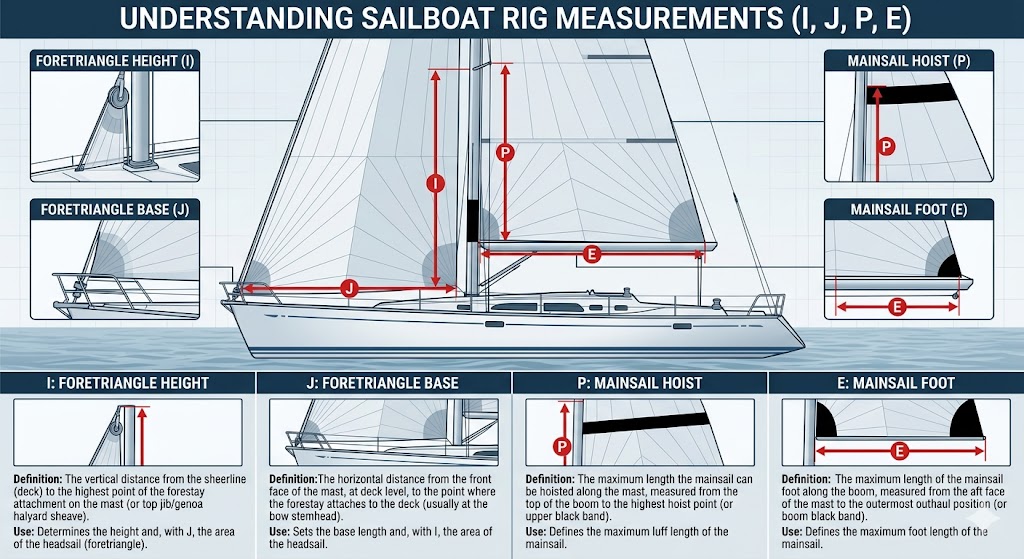
Rig Dimensions
I (Foretriangle Height) 23.70
J (Foretriangle Base) 13.78 ft / 4.20 m
P (Mainsail Luff) 605.00 ft² / 56.21 m²
E (Mainsail Foot) Volvo
Engine & Accommodations
Horsepower 18
Find a Farr 36 1990 For Sale