Back to Search
Ericson 39
Designer: Bruce King  ·  Builder: Ericson Yachts (Usa)  ·  First built: 1970
+ Add to Compare
Videos
About the Ericson 39

Designed by renowned naval architect Bruce King, this 39-footer represents a thoughtful blend of performance and comfort from Ericson's golden era of the 1970s. Built between 1970 and 1979 with only 105 hulls produced, the Ericson 39 has developed a devoted following among sailors seeking a capable coastal cruiser with offshore potential. The masthead sloop configuration and fin keel with rudder on skeg provide responsive handling while maintaining directional stability in challenging conditions. King's design philosophy emphasized seaworthiness without sacrificing sailing performance, evident in the boat's moderate displacement and well-balanced proportions. The substantial ballast-to-displacement ratio contributes to excellent stability and stiffness under sail. With her fiberglass construction and quality Ericson build standards, these boats have proven remarkably durable over the decades. The design excels at coastal cruising and extended passages, offering comfortable accommodations for couples or small families while maintaining the sailing characteristics that made Ericson's reputation. Her moderate draft allows access to many harbors while the robust construction handles rough weather confidently. For sailors seeking a classic American cruiser with proven offshore capabilities and distinctive character, the Ericson 39 remains a compelling choice in today's used boat market.

Market Price Estimate Beta
Small sample size. This estimate is based on fewer than 5 listings and may not be representative of the true market. Use with caution.
$3,000 – $19,500
typical asking price
Median $19,500  ·  3 listings used
All listings
$3,000 – $19,500 3
Rate a listing price
$
About this estimate
  • Prices are based on recent asking prices from public listings — not actual sale prices, which are typically lower.
  • Condition is not factored in. A well-maintained boat with new sails and engine can be worth significantly more than a project boat of the same model.
  • Location affects price. Boats in landlocked states or areas with fewer buyers often sell for less than those on the coast.
  • Year of manufacture is not filtered. Older examples of this model will generally be priced lower than newer ones.
  • Included equipment varies widely. A boat with a full suite of electronics, dodger, and new standing rigging may command a large premium.
  • Outliers are automatically excluded using statistical filtering to improve accuracy, but some bad data may remain.
Core Dimensions
LOA (Length Overall) 39.00 ft / 11.89 m
LWL (Waterline Length) 30.00 ft / 9.14 m
Beam 11.33 ft / 3.45 m
Max Draft 5.92 ft / 1.80 m
Displacement 19,000.00 lb / 8,618 kg
Ballast 9,500.00 lb / 4,309 kg
Ballast Type Lea
Design & Construction
Hull Type Fin with rudder on skeg
Rigging Type Masthead Sloop
Construction FG
Designer Bruce King
Builder Ericson Yachts (USA)
First Built 1970
Last Built 1979
Number Built 105
Associations Ericson Yachts Information
Owner Reviews

No owner reviews yet — be the first to share your experience with this boat.

Known Issues & What to Watch For
Medium Hull/Deck
The deck-to-hull joint on early Ericson 39s uses an outward-turning flange secured with through-bolts and sealant. This joint is prone to weeping and separation, particularly at the bow and stern quarters, leading to water intrusion into the balsa-cored deck sections.
1970–1975 models
High Hull/Deck
Balsa core was used extensively in the deck construction. Areas around chainplates, stanchion bases, and deck hardware frequently show core rot due to fastener holes that were not properly sealed at the factory, allowing water migration over decades.
High Hull/Deck
The chainplate backing plates are glassed into a relatively thin area of the deck structure. Chainplate leaks are extremely common and often go unaddressed for years, resulting in significant balsa core saturation and delamination around the shroud attachment points.
High Keel
The cast iron fin keel is attached with mild steel keel bolts that are prone to corrosion. The keel-to-hull joint often shows weeping rust staining, and the bolts should be carefully inspected or replaced as they can lose significant cross-section without visible external evidence.
High Keel
The keel sump area in the bilge tends to trap water against the keel bolt nuts, accelerating corrosion of the nuts and washers. Many boats of this vintage have never had the keel bolts retorqued or inspected, and interior fiberglass tabbing around the sump can hide advanced deterioration.
High Rigging
The chainplates on the Ericson 39 are internal, glassed-in plates that pass through the deck. The through-deck portion is a known chronic leak point, and the plates themselves can develop crevice corrosion at the point where they exit the deck, which is often hidden by interior trim and difficult to inspect without disassembly.
Medium Engine
Many early Ericson 39s were fitted with the Universal Atomic 4 gasoline engine. These engines are aged well beyond their service life and present fuel system and ignition reliability concerns; confirm whether the original engine is still fitted or has been replaced with a diesel, as diesel conversions are common and vary widely in quality.
1970–1976 models
Medium Engine
The engine compartment on the Ericson 39 has limited access, making routine maintenance on both original gasoline and retrofit diesel installations difficult. Inspect for evidence of overheating, exhaust manifold corrosion, and raw water cooling system deterioration, which are frequently neglected due to poor access.
Medium Electrical
Original wiring from 1970s production is now 45–50 years old and commonly shows brittle insulation, undersized conductors, and non-tinned copper wiring throughout. Panel and wiring upgrades should be considered a near-certainty requirement on boats that have not been rewired.
Medium Accommodations
The teak and holly cabin sole is often delaminated or soft in areas over the bilge sump due to decades of moisture exposure. Soft spots underfoot can indicate structural concerns with the underlying fiberglass pan, not just cosmetic sole damage.

Own or have surveyed a Ericson 39? Submit a known issue
Performance Ratios
PHRF Rating PHRF (Performance Handicap Racing Fleet) is a national racing handicap measured in seconds per nautical mile. Lower values indicate faster boats. Ratings are sourced from US Sailing's national database (median across 60+ regional fleets).
Under 0 — Ultralight racer0–90 — Performance racer90–150 — Cruiser/racer150–210 — Typical cruiserOver 210 — Heavy/slow cruiser
111
Ballast/Displacement Ballast to Displacement ratio shows what percentage of the boat's total weight is ballast. Higher values generally mean better initial stability and stiffer sail carrying.
30–35% — Typical cruiser35–45% — Stiff performance boatOver 45% — Racing oriented
50.0
S# (Speed Number) The Speed Number (S#) is a quick performance index. Higher values indicate a faster, more powerful design relative to its size.
Under 3.0 — Slow cruiser3.0–5.0 — Average cruiser5.0–7.0 — Performance cruiserOver 7.0 — Racer
1.61
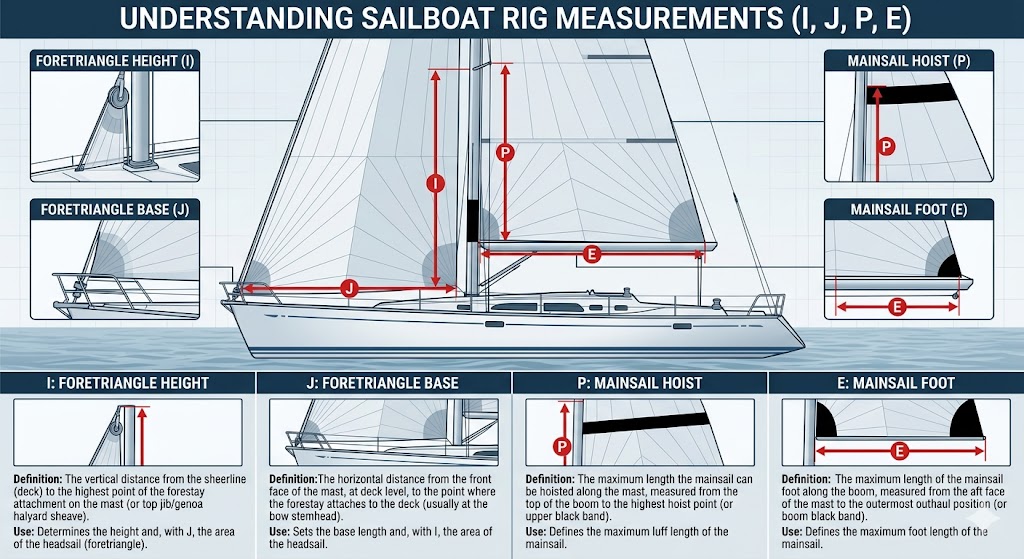
Rig Dimensions
I (Foretriangle Height) 52.00 ft / 15.85 m
J (Foretriangle Base) 16.50 ft / 5.03 m
P (Mainsail Luff) 44.00 ft / 13.41 m
E (Mainsail Foot) 14.00 ft / 4.27 m
How It Compares

vs. Cal 39 Mk Ii 1 147, Carter 39, Pearson 390, Santana 39, Yorktown 39

This boat Similar boats
Dimensions
LOA
Ericson 39 ★
39.0 ft
Cal 39 Mk Ii 1 147
39.0 ft
Carter 39
39.0 ft
Pearson 390
39.0 ft
Santana 39
39.0 ft
Yorktown 39
39.0 ft
LWL
Ericson 39 ★
30.0 ft
Cal 39 Mk Ii 1 147
32.1 ft
Carter 39
30.0 ft
Pearson 390
33.7 ft
Santana 39
31.0 ft
Yorktown 39
33.0 ft
Beam
Ericson 39 ★
11.3 ft
Cal 39 Mk Ii 1 147
12.0 ft
Carter 39
12.8 ft
Pearson 390
13.0 ft
Santana 39
11.7 ft
Yorktown 39
11.8 ft
Displacement
Ericson 39 ★
19 lbs
Cal 39 Mk Ii 1 147
17 lbs
Carter 39
18 lbs
Pearson 390
20 lbs
Santana 39
18 lbs
Yorktown 39
19 lbs
Ballast
Ericson 39 ★
9 lbs
Cal 39 Mk Ii 1 147
7 lbs
Carter 39
7 lbs
Pearson 390
7 lbs
Santana 39
6 lbs
Yorktown 39
7 lbs
Sail Area
Ericson 39 ★
Cal 39 Mk Ii 1 147
Carter 39
734 sq ft
Pearson 390
663 sq ft
Santana 39
686 sq ft
Yorktown 39
Performance
PHRF Rating (lower = faster)
Ericson 39 ★
111 s/nm
Cal 39 Mk Ii 1 147
Carter 39
108 s/nm
Pearson 390
173 s/nm
Santana 39
126 s/nm
Yorktown 39
168 s/nm
SA / Displacement (higher = more powerful)
Ericson 39 ★
Cal 39 Mk Ii 1 147
Carter 39
16.7
Pearson 390
14.2
Santana 39
16.0
Yorktown 39
Ballast / Disp (higher = stiffer)
Ericson 39 ★
50.0 %
Cal 39 Mk Ii 1 147
41.2 %
Carter 39
Pearson 390
36.4 %
Santana 39
36.7 %
Yorktown 39
36.8 %
Comfort Ratio (higher = more comfortable offshore)
Ericson 39 ★
Cal 39 Mk Ii 1 147
Carter 39
29.9
Pearson 390
29.7
Santana 39
31.6
Yorktown 39
Capsize Screening (lower = safer)
Ericson 39 ★
Cal 39 Mk Ii 1 147
Carter 39
1.92
Pearson 390
1.90
Santana 39
1.78
Yorktown 39
Displacement / Length (lower = lighter)
Ericson 39 ★
Cal 39 Mk Ii 1 147
229
Carter 39
Pearson 390
240
Santana 39
269
Yorktown 39
236
Hull Speed
Ericson 39 ★
Cal 39 Mk Ii 1 147
Carter 39
7.3 kts
Pearson 390
7.8 kts
Santana 39
7.5 kts
Yorktown 39
Speed Number (higher = faster)
Ericson 39 ★
1.6
Cal 39 Mk Ii 1 147
Carter 39
1.7
Pearson 390
2.0
Santana 39
1.9
Yorktown 39
Find a Ericson 39 For Sale