Back to Search
Cs 27
Designer: Raymond Wall  ·  Builder: Canadian Sailcraft  ·  First built: 1975
+ Add to Compare
About the Cs 27

With limited specifications available for the CS 27, this sailboat represents part of the Canadian Sailcraft lineage that emerged during the 1970s sailing boom. Canadian Sailcraft established a reputation for building practical, well-constructed boats designed to handle the demanding conditions of the Great Lakes and coastal waters. Based on its 27-foot length, this model likely falls into the popular pocket cruiser category that gained tremendous popularity during this era. These boats typically offered a compelling blend of daysailing capability and weekend cruising comfort, making them ideal for sailors seeking their first keelboat or those wanting a manageable vessel for coastal exploration. Canadian Sailcraft boats generally featured solid construction methods and sensible design approaches that prioritized seaworthiness over flashy performance. The CS 27 would have been positioned as an affordable entry point into serious sailing, offering enough interior space for short-term cruising while remaining simple enough for single-handed operation. Given the builder's focus on practical sailing boats, the CS 27 most likely excelled at coastal cruising and club racing, providing reliable performance in a variety of conditions while maintaining the kind of honest sailing characteristics that made Canadian Sailcraft boats popular among recreational sailors throughout North America.

Core Dimensions
LOA (Length Overall) 27.00 ft / 8.23 m
LWL (Waterline Length) 23.92 ft / 7.29 m
Beam 9.33 ft / 2.84 m
Max Draft 5.17 ft / 1.58 m
Displacement 6,100.00 lb / 2,767 kg
Ballast 2,400.00 lb / 1,089 kg
Sail Area (Reported) 453.00 ft² / 42.09 m²
Design & Construction
Hull Type Fin w/transom hung rudder
Rigging Type Masthead Sloop
Construction FG
Designer Raymond Wall
Builder Canadian Sailcraft
First Built 1975
Last Built 1983
Owner Reviews

No owner reviews yet — be the first to share your experience with this boat.
Performance Ratios
PHRF Rating PHRF (Performance Handicap Racing Fleet) is a national racing handicap measured in seconds per nautical mile. Lower values indicate faster boats. Ratings are sourced from US Sailing's national database (median across 60+ regional fleets).
Under 0 — Ultralight racer0–90 — Performance racer90–150 — Cruiser/racer150–210 — Typical cruiserOver 210 — Heavy/slow cruiser
204
SA/Displacement Sail Area to Displacement ratio measures how much sail power a boat has relative to its weight. Higher values mean more performance and speed.
Under 14 — Heavy cruiser, slow14–18 — Cruising sailboat18–22 — Cruiser/racerOver 22 — Performance racer
21.78
Comfort Ratio Ted Brewer's Comfort Ratio predicts how comfortable a boat will feel in offshore conditions. Higher values mean a steadier, more comfortable motion in a seaway.
Under 20 — Uncomfortably rough20–30 — Acceptable coastal30–40 — Good offshore comfortOver 40 — Very comfortable offshore
19.38
Capsize Screening Formula The USHS Capsize Screening Formula estimates offshore capsize risk. Lower is safer — values under 2.0 are considered acceptable for offshore sailing.
Under 2.0 — Safe for offshore2.0–2.2 — Borderline offshoreOver 2.2 — Coastal use recommended
2.05
Hull Speed Hull Speed is the theoretical maximum speed of a displacement hull, calculated from waterline length. Most cruising sailboats reach this speed in moderate conditions. 6.55
S# (Speed Number) The Speed Number (S#) is a quick performance index. Higher values indicate a faster, more powerful design relative to its size.
Under 3.0 — Slow cruiser3.0–5.0 — Average cruiser5.0–7.0 — Performance cruiserOver 7.0 — Racer
2.64
Pounds/Inch Immersion Pounds per Inch Immersion (PPI) tells you how much weight is needed to sink the boat one inch. Useful for calculating how additional gear and stores affect waterline. 797.42
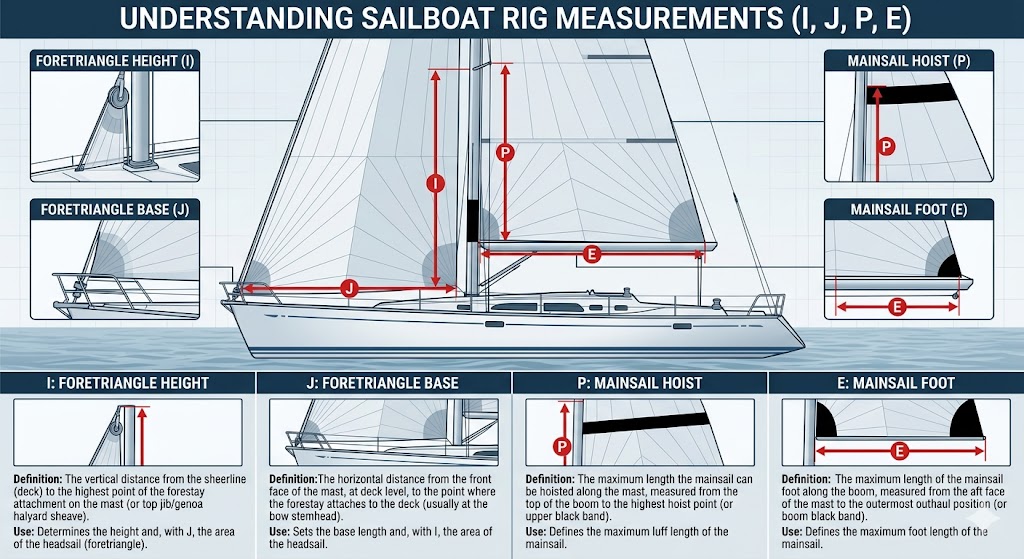
Rig Dimensions
I (Foretriangle Height) 36.2
J (Foretriangle Base) 10.75
P (Mainsail Luff) 30.0
E (Mainsail Foot) 9.7
SA Fore 194.58
SA Main 145.5
How It Compares

vs. Hughes Columbia 27, Tartan 27 2, Watkins 27

This boat Similar boats
Dimensions
LOA
Cs 27 ★
27.0 ft
Hughes Columbia 27
27.0 ft
Tartan 27 2
27.0 ft
Watkins 27
27.0 ft
LWL
Cs 27 ★
23.9 ft
Hughes Columbia 27
21.3 ft
Tartan 27 2
21.4 ft
Watkins 27
23.7 ft
Beam
Cs 27 ★
9.3 ft
Hughes Columbia 27
9.3 ft
Tartan 27 2
8.6 ft
Watkins 27
10.0 ft
Displacement
Cs 27 ★
6 lbs
Hughes Columbia 27
7 lbs
Tartan 27 2
7 lbs
Watkins 27
7 lbs
Ballast
Cs 27 ★
2 lbs
Hughes Columbia 27
3 lbs
Tartan 27 2
2 lbs
Watkins 27
3 lbs
Sail Area
Cs 27 ★
453 sq ft
Hughes Columbia 27
Tartan 27 2
413 sq ft
Watkins 27
Performance
PHRF Rating (lower = faster)
Cs 27 ★
204 s/nm
Hughes Columbia 27
Tartan 27 2
234 s/nm
Watkins 27
234 s/nm
SA / Displacement (higher = more powerful)
Cs 27 ★
21.8
Hughes Columbia 27
Tartan 27 2
17.5
Watkins 27
Ballast / Disp (higher = stiffer)
Cs 27 ★
Hughes Columbia 27
42.5 %
Tartan 27 2
Watkins 27
46.7 %
Comfort Ratio (higher = more comfortable offshore)
Cs 27 ★
19.4
Hughes Columbia 27
Tartan 27 2
28.1
Watkins 27
Capsize Screening (lower = safer)
Cs 27 ★
2.05
Hughes Columbia 27
Tartan 27 2
1.77
Watkins 27
Displacement / Length (lower = lighter)
Cs 27 ★
Hughes Columbia 27
339
Tartan 27 2
Watkins 27
252
Hull Speed
Cs 27 ★
6.6 kts
Hughes Columbia 27
Tartan 27 2
6.2 kts
Watkins 27
Speed Number (higher = faster)
Cs 27 ★
2.6
Hughes Columbia 27
Tartan 27 2
1.4
Watkins 27
Find a Cs 27 For Sale